

The Business Cost of a Blocked Drain: Why Reactive Maintenance Is a False Economy
 Nobody ever mentions the drainage system at an annual shareholders' meeting, unless something has gone spectacularly wrong. Buried beneath buildings, car parks and production facilities, drainage infrastructure quietly supports daily commercial operations without receiving much recognition. Unfortunately, that lack of attention often extends to maintenance budgets, where drainage inspections are regarded as an unnecessary expense until an emergency proves otherwise.
Reactive maintenance might appear financially sensible on a spreadsheet, but drainage failures rarely restrict their financial impact to the cost of repairs. A relatively straightforward blockage can trigger a series of expensive operational problems that affect several departments simultaneously.
When Business Comes to a Standstill
A restaurant with overflowing drains may have little choice but to close its doors. A manufacturing facility experiencing wastewater problems could be forced to suspend production, while a hotel might have to relocate guests and issue refunds. None of these scenarios becomes particularly attractive when employees still need paying and overheads continue accumulating.Lost trading hours can quickly exceed the cost of several years of preventative maintenance. Businesses operating with tight delivery schedules may also face contractual penalties, missed deadlines and additional transportation expenses.
Unfortunately, blocked drains have little respect for seasonal trading patterns, important client visits or the managing director's carefully scheduled annual holiday.
Stock Damage and Unexpected Expenses
Commercial properties frequently contain valuable inventory, electrical equipment and specialist machinery. When wastewater enters storage or operational areas, contamination can render otherwise perfectly usable stock unsuitable for sale.Food manufacturers and hospitality businesses face particularly serious consequences, as contamination may require extensive cleaning, stock disposal and additional safety inspections before normal operations can resume.
Insurance coverage may offset certain losses, but excess payments, exclusions and potentially higher future premiums can leave businesses carrying substantial expenses.
Reputational Damage Is Harder to Calculate
Customers generally understand that businesses occasionally encounter technical difficulties. However, unpleasant smells, flooded toilets and wastewater escaping into public areas tend to leave particularly lasting impressions.With smartphones readily available, a drainage incident can acquire an enthusiastic online audience before the facilities manager has even located the inspection chamber.
Restoring customer confidence may require considerable time and expenditure, making reputational damage one of the least predictable financial consequences of neglected drainage infrastructure.
Identifying Vulnerable Drainage Infrastructure
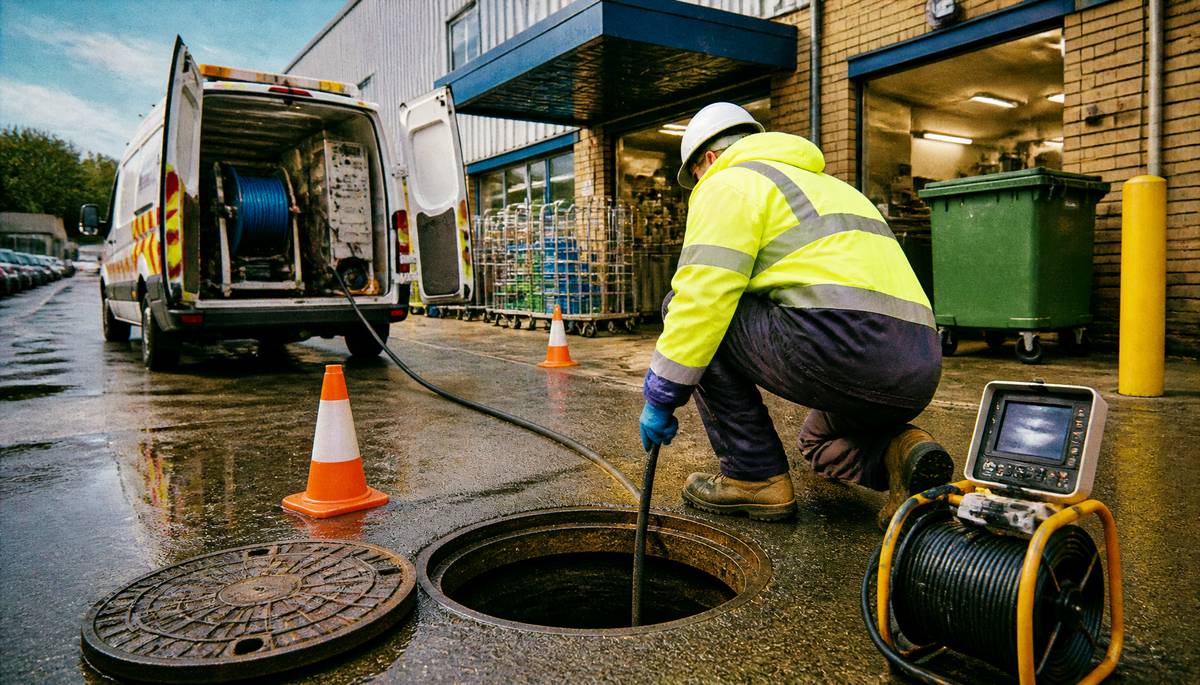
Not every section of a commercial drainage system requires the same level of attention. Kitchens, food processing facilities and industrial workshops often produce waste that increases the likelihood of blockages. External drains near trees may suffer from root intrusion, while older underground pipes can deteriorate through ground movement and prolonged use.CCTV drainage surveys allow facilities managers to identify structural defects, accumulating debris and potential obstructions without undertaking disruptive excavation work.
Keeping detailed records of previous drainage incidents can also reveal recurring problems. If the same pipe becomes blocked every three months, it probably deserves more than a stern talking-to.
Establishing a Preventative Maintenance Schedule
Maintenance schedules should reflect the nature of commercial activities, the age of the building and the volume of wastewater being generated.Facilities managers should consider incorporating the following activities into their maintenance programmes:
- Scheduled high-pressure drain cleaning.
- Periodic CCTV inspections of underground pipework.
- Regular cleaning and servicing of grease traps.
- Inspection of external drains before periods of heavy rainfall.
- Staff training regarding appropriate waste disposal practices.
Calculating the Financial Benefits of Prevention
Facilities managers seeking approval for preventative maintenance budgets should present a realistic assessment of the financial risks associated with drainage failures.Consider a business generating £1,500 in revenue per trading hour. An eight-hour closure represents £12,000 in potentially lost revenue, before accounting for emergency contractor fees, cleaning expenses and damaged inventory.
Although lost revenue should not be confused with lost profit, calculating the contribution margin on missed sales alongside additional expenses provides a useful estimate of the actual financial impact. Comparing these figures against annual maintenance expenditure helps businesses make informed investment decisions.
Keeping Profits Out of the Gutter
Preventative drainage maintenance deserves the same consideration as servicing machinery, maintaining electrical installations and inspecting fire safety equipment. Reliable infrastructure protects operational continuity, employee welfare and customer confidence.Underground pipes may never feature prominently in a company's promotional material, but keeping them functioning properly could be among the more financially rewarding decisions management makes all year.
Article kindly provided by expressdrainagesolutions.co.uk
Latest Articles
- The Business Cost of a Blocked Drain: Why Reactive Maintenance Is a False Economy
- When Almost Matching Colours Become Expensive Construction Mistakes
- How Master Gears Help Manufacturers Improve Quality and Reduce Costs
- Why a Plumbing Company's Google Reviews Matter More Than Its Advertising Budget in 2026
- Why Business Parks Should Think Twice Before Removing Their Mature Trees
- Why the Quietest Toilet in the Building Could Be Wasting the Most Water
- Could Someone Understand Compliance Six Months After It's Written?
- How Much CNC Capacity Is Hidden in Setup Time?
- How to Test a New Freelancer Without Handing Over Your Whole Project
- From CAD File to Finished Component: How Procurement Teams Can Avoid Custom-Part Delays
- The Repair-or-Replace Calculation: When an Older Computer Is Still Worth Saving
- Why Commercial Roof Problems Often Start as Access Problems
- The Cybersecurity Weakness Most Businesses Overlook
- Waste Audits for Small Businesses: The Simple Exercise That Can Cut Costs
- Why Fitness Goals Fail at Work but Succeed at Home
- The Hidden Cost of Guessing What Your Competitors Are Doing
- Why the Best Commercial Sites Are Designed Around Traffic Flow Before Appearance
- Designing Offices That Still Work Five Years From Now
- Why the Most Successful Commercial Landscapes Prioritise Function Before Appearance
- How Businesses Can Stay Operational During Major Refurbishment Works
- Sales and Marketing
- Human Resources
- Finance and Accounting
- Business Consulting
- Information Technology
- Supply Chain Management
- Manufacturing and Production
- Logistics and Transportation
- Risk Management
- Project Management
- Market Research
- Business Intelligence
- Customer Relationship Management
- Product Development
- Quality Assurance
- Outsourcing Services
- Procurement and Vendor Management
- Legal and Compliance
- Business Strategy
- Operations Management
- Leadership and Management
- Data Analytics
- Innovation and R&D
- Training and Development
- Ecommerce Solutions
- Public Relations
- Advertising and Promotion
- Branding and Identity
- Business Networking
- Event Management
- Office Environment