

Waste Audits for Small Businesses: The Simple Exercise That Can Cut Costs
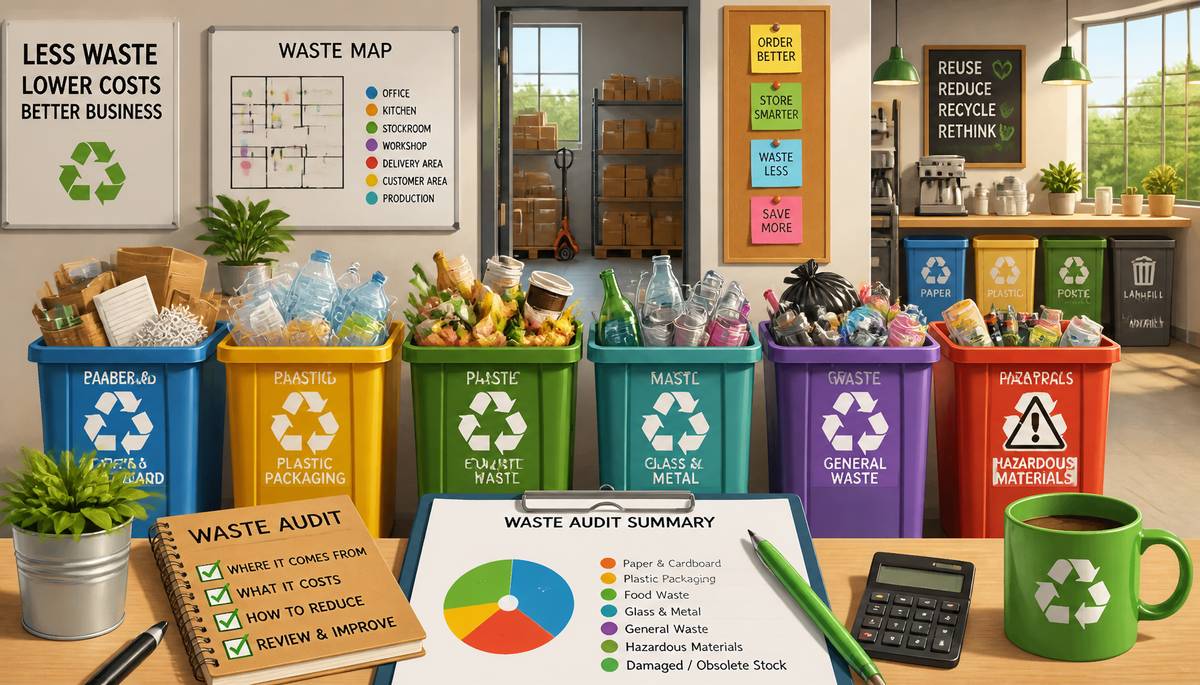 A bin can reveal more about a business than some management reports. Overflowing packaging, unused materials, food scraps, disposable cups and mysterious objects nobody remembers buying all point to avoidable costs. A waste audit turns this everyday clutter into useful information, helping small businesses understand what they discard, why they discard it and whether they are paying too much to make it disappear.
The process does not require a specialist laboratory, a clipboard squad or protective suits worthy of a science-fiction film. For many businesses, it simply means examining waste over a representative period, recording what is being thrown away and identifying practical opportunities to reduce it.
Start by Mapping Where Waste Appears
Begin by listing the main areas of the business that generate waste. These might include offices, kitchens, stockrooms, workshops, delivery areas, customer spaces and production zones. Each area is likely to produce a different mixture of materials.An office may discard paper, printer cartridges and food packaging, while a retailer may generate cardboard, plastic wrapping and damaged stock. A café will have food waste, containers and single-use items. A workshop may produce timber, metal, offcuts or specialist materials requiring separate handling.
Record where each waste stream originates rather than treating everything as one anonymous mountain. This makes it easier to identify whether the problem comes from purchasing, storage, working practices, customer behaviour or poor bin placement. Sometimes the recycling bin is simply on the wrong side of the room, apparently guarded by an invisible dragon.
Measure What Is Actually Being Thrown Away
Choose a typical working week and inspect the waste produced during that period. Avoid unusually quiet weeks, major clearances or seasonal peaks unless those periods are specifically being assessed.Businesses can record waste by weight, number of bags, container volume or frequency of collection. Absolute precision is less important than consistency. The purpose is to establish a reliable picture that can be compared over time.
Useful categories may include:
- Paper and cardboard
- Plastic packaging
- Food waste
- Glass and metal
- Damaged or obsolete stock
- General non-recyclable waste
- Hazardous or regulated materials
Follow the Money Behind the Bin
Once waste volumes are understood, compare them with collection invoices, container sizes and pickup schedules. A business may be paying for bins that are collected half empty, or repeatedly overfilling containers because the service is too small for its needs.The audit should also consider the original purchase cost of discarded materials. Throwing away twenty pounds of spoiled stock costs more than the disposal fee alone. It represents wasted purchasing, storage, handling time and potential revenue.
Look for Small Changes with Big Results
Many businesses expect waste reduction to involve expensive equipment or lengthy operational changes. In reality, the biggest improvements often come from straightforward adjustments. Repositioning recycling bins, improving storage practices or changing ordering habits can noticeably reduce the amount of material heading for disposal.If cardboard boxes are filling general waste bins, create a dedicated collection point where boxes can be flattened before collection. If food waste is unusually high, review ordering patterns and portion sizes. If damaged stock appears regularly, investigate whether the issue begins during delivery, storage or handling.
Staff involvement is equally important. Employees often know exactly where waste occurs because they deal with it every day. Asking for suggestions can uncover practical ideas that management may never notice. Someone in the warehouse might have been quietly wondering why perfectly usable pallets are discarded every Friday while another department orders replacements every Monday.
Improve Recycling Without Making Life Difficult
A successful recycling system should be obvious rather than complicated. If staff need an instruction manual every time they approach a bin, participation will probably decline.Clearly labelled containers, sensible locations and consistent guidance make a noticeable difference. Colour coding can also help people separate materials correctly without having to stop and think during a busy working day.
Contaminated recycling can increase disposal costs and reduce the value of recyclable materials, so it pays to keep different waste streams separate where practical. Simple reminders near collection points often work better than lengthy policy documents that spend most of their working lives unopened in a shared folder.
Review the Findings Regularly
A waste audit should not be treated as a one-off exercise. Businesses change over time. Product lines evolve, staffing levels fluctuate, customer demand shifts and operational processes improve. Reviewing waste data every few months helps identify new trends before unnecessary costs become established habits.Comparing audits over time also provides evidence that improvements are working. Lower disposal costs, reduced waste volumes and improved recycling rates become measurable outcomes rather than hopeful assumptions. This information can support budgeting decisions and demonstrate environmental progress to customers, suppliers and other stakeholders where appropriate.
Bin There Reduced That
Waste is often viewed as an unavoidable consequence of running a business, but a closer look usually tells a different story. Every discarded item has already consumed money, time and resources before it reaches a container. Understanding why it ended up there is often more valuable than simply arranging for it to be collected.A well-planned waste audit gives small businesses a clearer picture of their daily operations without demanding major investment or disrupting normal work. By identifying where waste originates, measuring what is being discarded and making targeted improvements, organisations can lower disposal costs, improve recycling performance and operate more efficiently. Sometimes the quickest route to saving money begins with taking a closer look at what everyone has been happily throwing away.
Article kindly provided by theskipshop.co.uk
Latest Articles
- Why a Plumbing Company's Google Reviews Matter More Than Its Advertising Budget in 2026
- Why Business Parks Should Think Twice Before Removing Their Mature Trees
- Why the Quietest Toilet in the Building Could Be Wasting the Most Water
- Could Someone Understand Compliance Six Months After It's Written?
- How Much CNC Capacity Is Hidden in Setup Time?
- How to Test a New Freelancer Without Handing Over Your Whole Project
- From CAD File to Finished Component: How Procurement Teams Can Avoid Custom-Part Delays
- The Repair-or-Replace Calculation: When an Older Computer Is Still Worth Saving
- Why Commercial Roof Problems Often Start as Access Problems
- The Cybersecurity Weakness Most Businesses Overlook
- Waste Audits for Small Businesses: The Simple Exercise That Can Cut Costs
- Why Fitness Goals Fail at Work but Succeed at Home
- The Hidden Cost of Guessing What Your Competitors Are Doing
- Why the Best Commercial Sites Are Designed Around Traffic Flow Before Appearance
- Designing Offices That Still Work Five Years From Now
- Why the Most Successful Commercial Landscapes Prioritise Function Before Appearance
- How Businesses Can Stay Operational During Major Refurbishment Works
- Near Misses: The Most Valuable Workplace Incidents You're Probably Ignoring
- Choosing the Right Lifting Method Before Choosing the Equipment
- Why Visitors Ignore Half Your Homepage Within Three Seconds
- Sales and Marketing
- Human Resources
- Finance and Accounting
- Business Consulting
- Information Technology
- Supply Chain Management
- Manufacturing and Production
- Logistics and Transportation
- Risk Management
- Project Management
- Market Research
- Business Intelligence
- Customer Relationship Management
- Product Development
- Quality Assurance
- Outsourcing Services
- Procurement and Vendor Management
- Legal and Compliance
- Business Strategy
- Operations Management
- Leadership and Management
- Data Analytics
- Innovation and R&D
- Training and Development
- Ecommerce Solutions
- Public Relations
- Advertising and Promotion
- Branding and Identity
- Business Networking
- Event Management
- Office Environment