

From Gravel to Concrete: When Businesses Should Upgrade Outdoor Access Areas
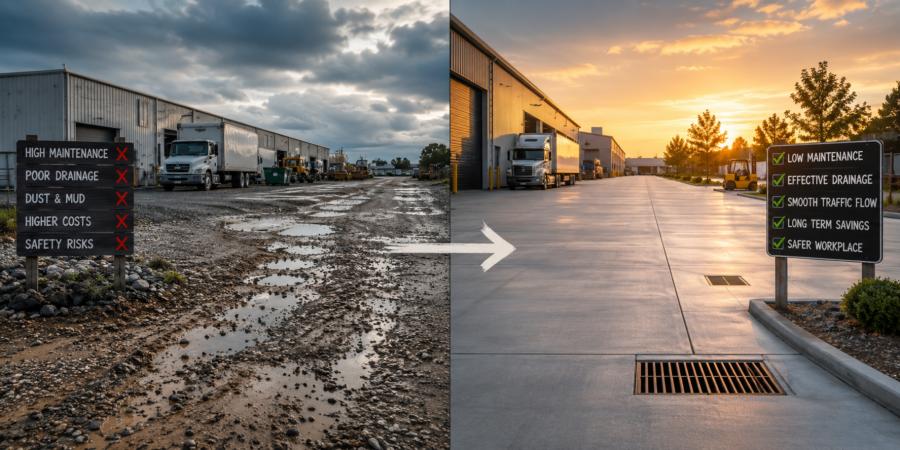 A parking lot can reveal more about a business than its lobby. Cracked gravel, muddy access roads, and uneven loading zones send a message long before a customer reaches the front door or a delivery driver mutters something inventive under their breath.
Outdoor access areas are often treated like background scenery until they become expensive, inconvenient, or mildly rebellious. For commercial and industrial properties, upgrading from gravel or deteriorating surfaces to concrete is not merely a cosmetic project. It is an operational decision tied to safety, maintenance, logistics, and long-term financial planning.
When Gravel Starts Charging Rent
Gravel has its place. It is relatively affordable to install, flexible for temporary use, and useful for businesses still evaluating site layouts or expansion plans. Yet many properties outgrow it faster than expected.Heavy traffic changes the equation. Delivery vehicles, forklifts, employee traffic, and customer vehicles gradually shift and displace gravel surfaces. Ruts form. Dust appears during dry periods. Rain introduces puddles and soft spots that seem to develop a personal attachment to tire tracks.
The financial impact of this deterioration is often underestimated. Maintenance may appear manageable when viewed as isolated expenses, but repeated grading, fresh gravel delivery, dust control, and labor costs accumulate steadily.
A business might postpone replacement because gravel repairs feel less intimidating than a concrete installation. Unfortunately, recurring maintenance can become a subscription nobody knowingly signed up for.
Serious operational environments face even greater challenges. Distribution centers, manufacturing sites, equipment yards, and commercial facilities with constant vehicle movement require stable surfaces capable of handling consistent stress without frequent intervention.
Maintenance Costs Beyond the Surface
Maintenance should be evaluated through a long-term lens rather than a seasonal budget line.Concrete generally demands higher upfront investment, but it offers predictability that many businesses value. Unlike gravel, properly installed concrete resists displacement and requires less routine reshaping or material replacement.
Several maintenance considerations often influence the upgrade decision:
- Reduced grading and resurfacing needs
- Lower dust management expenses
- Improved accessibility for vehicles and pedestrians
- Fewer disruptions caused by surface repairs
For businesses operating on schedules where timing affects revenue, dependable surfaces become part of operational efficiency rather than a separate facilities issue.
Drainage and Erosion Are Quiet Accountants
Water has remarkable patience. It rarely storms into a commercial property announcing its plans. Instead, it settles into low spots, softens surfaces, redirects traffic patterns, and steadily increases maintenance costs.Drainage problems are one of the strongest indicators that a gravel or deteriorating access area may have reached the end of its practical life.
Poor drainage creates standing water, erosion, and unstable ground conditions. Gravel surfaces can wash out during heavy rainfall or shift under repeated water exposure. Businesses located in regions with seasonal storms or frequent downpours often spend substantial amounts correcting drainage-related damage without fully resolving the underlying issue.
Concrete installations, when designed with proper grading and drainage planning, offer greater control over water movement. Slopes, drains, and runoff management systems can direct water away from traffic areas and structures more effectively.
This matters for more than appearance. Water intrusion affects loading operations, pedestrian safety, and equipment mobility. Muddy or flooded access routes slow deliveries and create avoidable hazards.
Infrastructure decisions deserve careful engineering review because drainage mistakes are expensive to revisit. A poorly planned upgrade merely transforms an old problem into a newer, shinier version with paperwork attached.
Vehicle Traffic Changes the Math
Traffic volume and vehicle weight often determine whether gravel remains practical.A lightly used storage yard may function adequately with gravel for years. A commercial site handling regular truck traffic operates under different conditions altogether.
Repeated pressure from delivery trucks, waste collection vehicles, service fleets, and industrial equipment accelerates surface deterioration. Tire movement pushes loose aggregate outward while concentrated weight produces depressions and uneven zones.
Concrete offers structural advantages for sites with demanding traffic patterns. Properly reinforced slabs support heavy loads with greater consistency and provide smoother travel paths for vehicles and equipment.
This smoother operation influences daily productivity in subtle but measurable ways. Drivers maneuver more efficiently. Equipment experiences fewer jolts. Material handling becomes more predictable. Forklift operators generally prefer not feeling as though they are participating in an off-road expedition before lunch.
Businesses that depend on reliable vehicle movement often discover that surface stability supports broader operational goals, including scheduling accuracy and reduced equipment strain.
Long-Term Usability and Property Value
Permanent surface upgrades should be viewed as long-term infrastructure investments rather than isolated construction expenses.Concrete access areas often improve usability for many years with comparatively modest maintenance demands. This stability supports future expansion, evolving traffic needs, and changing business requirements.
Property value considerations also enter the discussion. Well-maintained concrete surfaces can strengthen site presentation and improve perceptions among customers, tenants, inspectors, and business partners. A professional exterior suggests organized operations and long-range planning.
Some businesses hesitate because installation costs appear significant. That caution is understandable. Yet evaluating only the initial price can obscure the broader financial picture.
A practical comparison considers total ownership costs over time, including:
- Routine maintenance expenses
- Operational interruptions
- Drainage and erosion repairs
- Vehicle and equipment wear
- Long-term functionality of the site
Paving the Way Forward
Upgrading from gravel or deteriorating surfaces to concrete is rarely about chasing appearances. It is about creating dependable infrastructure that supports business operations without demanding constant attention.Gravel can serve well during certain stages of development or lighter-use applications. But when maintenance becomes repetitive, drainage problems persist, or vehicle demands intensify, permanent concrete solutions often make stronger operational and financial sense.
Solid ground may not inspire dramatic speeches during quarterly meetings, yet it quietly supports nearly everything happening above it. And unlike that one pothole employees have been avoiding for three years, concrete generally prefers not to become part of workplace folklore.
Article kindly provided by concreteftcollins.com
Latest Articles
- Why the Quietest Toilet in the Building Could Be Wasting the Most Water
- Could Someone Understand Compliance Six Months After It's Written?
- How Much CNC Capacity Is Hidden in Setup Time?
- How to Test a New Freelancer Without Handing Over Your Whole Project
- From CAD File to Finished Component: How Procurement Teams Can Avoid Custom-Part Delays
- The Repair-or-Replace Calculation: When an Older Computer Is Still Worth Saving
- Why Commercial Roof Problems Often Start as Access Problems
- The Cybersecurity Weakness Most Businesses Overlook
- Waste Audits for Small Businesses: The Simple Exercise That Can Cut Costs
- Why Fitness Goals Fail at Work but Succeed at Home
- The Hidden Cost of Guessing What Your Competitors Are Doing
- Why the Best Commercial Sites Are Designed Around Traffic Flow Before Appearance
- Designing Offices That Still Work Five Years From Now
- Why the Most Successful Commercial Landscapes Prioritise Function Before Appearance
- How Businesses Can Stay Operational During Major Refurbishment Works
- Near Misses: The Most Valuable Workplace Incidents You're Probably Ignoring
- Choosing the Right Lifting Method Before Choosing the Equipment
- Why Visitors Ignore Half Your Homepage Within Three Seconds
- Why Most Cybersecurity Conversations Ignore the Biggest Vulnerability: Everyday Workflow Habits
- What Your Workplace Is Communicating Before Anyone Says a Word
- Sales and Marketing
- Human Resources
- Finance and Accounting
- Business Consulting
- Information Technology
- Supply Chain Management
- Manufacturing and Production
- Logistics and Transportation
- Risk Management
- Project Management
- Market Research
- Business Intelligence
- Customer Relationship Management
- Product Development
- Quality Assurance
- Outsourcing Services
- Procurement and Vendor Management
- Legal and Compliance
- Business Strategy
- Operations Management
- Leadership and Management
- Data Analytics
- Innovation and R&D
- Training and Development
- Ecommerce Solutions
- Public Relations
- Advertising and Promotion
- Branding and Identity
- Business Networking
- Event Management
- Office Environment