

How One Day of Filming Can Become Months of Content
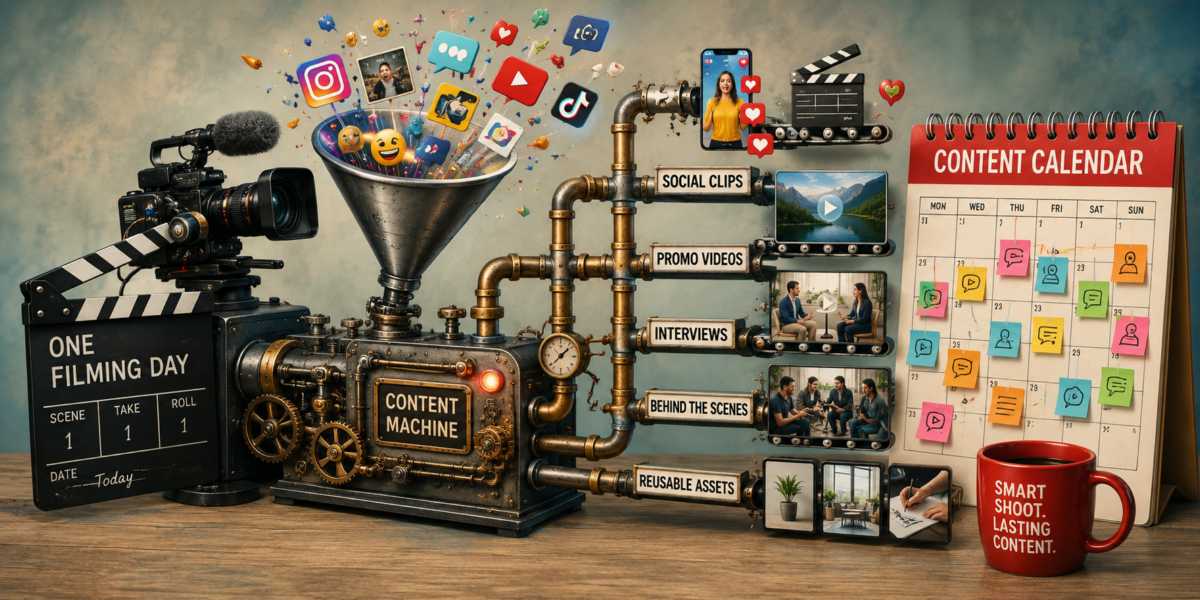 A camera crew can walk into a room at 9 a.m. and leave by dinner with enough material to make your marketing team look suspiciously well organised for the next quarter.
That is the power of planning a filming day properly. For marketers, freelancers, and small businesses, video production can feel expensive, time-consuming, and slightly dramatic. But one well-structured shoot can become social clips, promotional videos, interviews, testimonials, website content, email assets, and enough behind-the-scenes footage to make your brand look alive rather than assembled in a spreadsheet.
Start With the Content Menu
Before anyone touches a camera, decide what the footage needs to become. A filming day should not be treated as one video. It should be treated as raw material for many pieces of content.Plan for the main promotional video, then break the day into smaller possible outputs: short vertical clips, interview snippets, product demonstrations, customer quotes, team introductions, FAQs, bloopers, cutaways, and still images pulled from the footage. This is where the magic happens, although the magic mostly looks like a sensible spreadsheet and someone remembering to charge the batteries.
A strong filming plan might include:
- A main brand or campaign video
- Five to ten short social clips
- Interview answers edited into standalone posts
- Website header footage
- Behind-the-scenes content
- Reusable shots of products, staff, locations, or processes
Film for the Edit, Not Just the Day
A common mistake is filming only what seems useful in the moment. Smart filming means thinking ahead to the editor's needs. Editors are talented, but they cannot create a close-up of your product from thin air, unless they have recently developed wizard powers and kept quiet about it.Capture wide shots, close-ups, reaction shots, hands working, people walking, products being used, screens, signage, and natural movement. These extra shots, often called B-roll, are what allow one interview to become multiple polished clips. They cover edits, add energy, and stop every video from looking like someone trapped in a chair explaining quarterly goals.
Serious planning matters here. Every extra angle gives your content more life and flexibility. When footage is captured with multiple formats in mind, the final assets feel intentional instead of recycled. That difference is important. Repurposed content should not feel like leftovers. It should feel like a second serving that was planned all along.
Ask Questions That Create Clips
Interviews are one of the easiest ways to multiply content. The trick is asking questions that produce complete, useful answers. Instead of asking vague questions, guide people toward responses that can stand alone.For example, ask someone to explain one problem your customers face, one reason your service helps, one common misconception, or one piece of advice they would give to a beginner. Each answer can become its own short video, captioned clip, blog quote, or email section.
A single twenty-minute interview can produce weeks of posts when the questions are sharp. It also gives your brand a human voice, which is useful because "we provide solutions" has been marched around the internet so many times it now needs comfortable shoes.
Think Beyond One Platform
Different platforms reward different shapes of content. A horizontal promotional video may work beautifully on a website or video platform, while short vertical clips perform better on social feeds. That means filming with flexibility in mind.Record scenes with extra space around the subject so editors can crop for vertical formats. Capture alternate takes with different framing. Leave pauses between answers and actions. These small production choices make editing smoother and prevent that awkward moment when someone's forehead becomes the lead character in a vertical crop.
Serious content planning also reduces waste. Businesses often spend heavily on production and then publish a single video before moving on to the next project. That approach drains budgets and shortens campaign life. When filming is designed for adaptation, the return on investment improves dramatically.
One organised shoot can support months of communication without requiring constant production days or emergency brainstorming sessions held over cold coffee and growing panic.
Build a Library, Not a One-Time Project
Some footage is tied to a campaign, but much of it should be reusable. This is where long-term thinking changes everything.Capture evergreen material whenever possible. Team interactions, office scenes, products in use, customer service moments, workspace details, and general atmosphere can become valuable assets later. These clips may not feel exciting during the shoot, yet they often save future campaigns.
A content library gives businesses speed. Instead of scheduling another filming day every time a post is needed, marketers can pull from existing assets and maintain consistent quality.
Organisation matters here. Label files clearly, tag footage by topic or campaign, and store clips where the entire team can find them. A folder called "Final_Final_ActuallyFinal2" may hold emotional meaning, but it is not a reliable archive strategy.
Lights Camera Traction
One day of filming should not end with a single upload and polite applause from the marketing department.The strongest content strategies treat filming as an investment with multiple returns. Through careful planning, adaptable shooting, thoughtful interviews, and organised editing, a single production day becomes a source of ongoing value.
For freelancers, this approach stretches creative work further and increases client value. For small businesses, it lowers production pressure while keeping marketing active. For brands managing tighter budgets, it creates consistency without demanding constant reshoots.
The camera may pack away by evening, but the real work of that filming day is only getting started. Months later, those same clips can still be attracting attention, supporting campaigns, and proving that good planning deserves far more credit than it usually receives.
Article kindly provided by videographymanchester.co.uk
Latest Articles
- Why the Quietest Toilet in the Building Could Be Wasting the Most Water
- Could Someone Understand Compliance Six Months After It's Written?
- How Much CNC Capacity Is Hidden in Setup Time?
- How to Test a New Freelancer Without Handing Over Your Whole Project
- From CAD File to Finished Component: How Procurement Teams Can Avoid Custom-Part Delays
- The Repair-or-Replace Calculation: When an Older Computer Is Still Worth Saving
- Why Commercial Roof Problems Often Start as Access Problems
- The Cybersecurity Weakness Most Businesses Overlook
- Waste Audits for Small Businesses: The Simple Exercise That Can Cut Costs
- Why Fitness Goals Fail at Work but Succeed at Home
- The Hidden Cost of Guessing What Your Competitors Are Doing
- Why the Best Commercial Sites Are Designed Around Traffic Flow Before Appearance
- Designing Offices That Still Work Five Years From Now
- Why the Most Successful Commercial Landscapes Prioritise Function Before Appearance
- How Businesses Can Stay Operational During Major Refurbishment Works
- Near Misses: The Most Valuable Workplace Incidents You're Probably Ignoring
- Choosing the Right Lifting Method Before Choosing the Equipment
- Why Visitors Ignore Half Your Homepage Within Three Seconds
- Why Most Cybersecurity Conversations Ignore the Biggest Vulnerability: Everyday Workflow Habits
- What Your Workplace Is Communicating Before Anyone Says a Word
- Sales and Marketing
- Human Resources
- Finance and Accounting
- Business Consulting
- Information Technology
- Supply Chain Management
- Manufacturing and Production
- Logistics and Transportation
- Risk Management
- Project Management
- Market Research
- Business Intelligence
- Customer Relationship Management
- Product Development
- Quality Assurance
- Outsourcing Services
- Procurement and Vendor Management
- Legal and Compliance
- Business Strategy
- Operations Management
- Leadership and Management
- Data Analytics
- Innovation and R&D
- Training and Development
- Ecommerce Solutions
- Public Relations
- Advertising and Promotion
- Branding and Identity
- Business Networking
- Event Management
- Office Environment