

How to Renovate Without Losing Productivity: A Smarter Approach to Workplace Upgrades
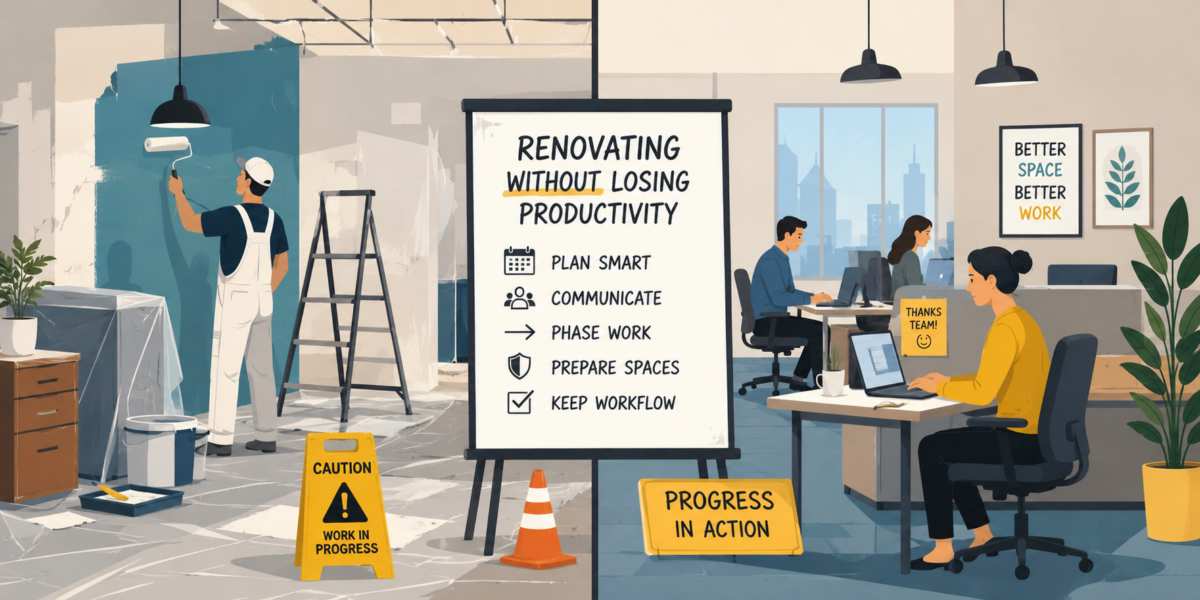 A renovation project can make even a well-run office behave like a startled flock of pigeons. One moment everyone is answering emails and discussing quarterly targets, and the next someone is balancing a laptop on a filing cabinet while asking whether the meeting room now smells faintly of primer or existential dread.
Workplace improvements are necessary. Paint fades, flooring wears down, layouts become inefficient, and facilities eventually begin sending polite but unmistakable hints that attention is overdue. Yet many businesses delay upgrades because they fear lost productivity more than peeling walls or outdated spaces.
That fear is understandable, but it is not unavoidable. Renovations do not have to derail operations when approached with planning, realistic scheduling, and a healthy respect for how people actually work.
Start With The Workday, Not The Worksite
The smartest renovation plan begins by studying the rhythm of the business. Before choosing paint colors, booking contractors, or moving furniture into formations that suggest modern art, identify when the workplace is busiest, which departments depend on quiet, and which areas are mission-critical.For an office, that may mean avoiding finance areas during month-end reporting. For a clinic, it may mean working around appointment flow. For a retail business, it may mean leaving customer-facing zones untouched during peak trading hours. Renovation planning should support operations, not ask operations to squeeze politely into whatever gaps remain.
A useful first step is to divide the workplace into zones: essential, flexible, low-traffic, and after-hours only. This helps managers and contractors decide what can happen during normal business hours and what must wait until evenings, weekends, or slower periods.
The goal is not simply to finish the upgrade quickly. The goal is to finish it without turning the workplace into a daily obstacle course with invoices.
Phase The Project Like A Sensible Human
Trying to renovate everything at once can look efficient on paper. On Tuesday morning, it often looks like three extension cords, two unavailable restrooms, and a printer that has entered witness protection.Phasing the work keeps disruption contained. Instead of treating the entire building as one giant project, split it into manageable sections. Complete one area, restore it fully, then move to the next. This gives employees and customers usable space throughout the process and prevents the dreaded "everything is almost done" stage from lasting six weeks.
A phased approach is especially useful for painting, flooring, lighting upgrades, and minor layout changes. It allows drying times, curing periods, inspections, and cleanup to be built into the schedule without freezing the whole business.
Good phasing also reduces decision fatigue. Managers can solve issues area by area rather than answering forty-seven questions at once, including whether the breakroom microwave counts as "equipment" or "emotional support."
Communicate Before Anyone Has To Guess
People can handle inconvenience better when they know what is happening. Silence, on the other hand, turns a simple hallway closure into office folklore by lunchtime.Before work begins, tell staff what will happen, when it will happen, which areas will be affected, and who to contact with questions. Customers or visitors may also need signs, emails, or appointment reminders, depending on the type of business.
Keep updates short and practical. Nobody needs a twelve-page renovation bulletin unless the building is being converted into a space station. Focus on what changes tomorrow, where people should go, and whether any noise, odor, access limits, or temporary relocations are expected.
Clear communication protects productivity because it prevents avoidable confusion. Employees should not have to discover a closed conference room five minutes before a client presentation. That is how mugs get gripped with unusual intensity.
Prepare The Space Before The First Ladder Appears
A renovation schedule can be beautifully planned and still wobble if the workspace is not ready. Before contractors arrive, remove personal items, clear surfaces, protect equipment, and decide where displaced furniture will go. "Just put it over there" is not a storage strategy. It is how a chair ends up living beside the copier for three months.For offices, this may include labeling desks, securing files, unplugging nonessential electronics, and protecting shared equipment. For customer-facing businesses, it may mean creating temporary routes, moving displays, or setting up a smaller but functional service area. Preparation reduces delays and helps contractors work efficiently without needing constant direction.
It is also worth assigning one internal point of contact. Too many voices can slow a project down quickly, especially when five people have strong opinions about one wall. A single contact keeps decisions consistent and prevents contractors from receiving contradictory instructions before lunch.
Protect Productivity With Temporary Systems
Even a well-managed upgrade will create some friction. The trick is to absorb that friction with temporary systems before it reaches employees or customers. Remote work days, staggered schedules, alternate meeting rooms, temporary signage, and adjusted delivery routes can all keep business moving while improvements are underway.For teams that rely heavily on calls or focused work, plan quiet zones away from active renovation areas. For businesses with visitors, make directions obvious and polite. A printed sign that says "Reception This Way" can prevent ten minutes of wandering and the facial expression people make when they are trying not to look lost.
Managers should also build in small productivity buffers. If a department is being moved on Wednesday, avoid scheduling its most important deadline for Wednesday afternoon. This sounds obvious, yet office calendars have a remarkable talent for drama.
The serious point is simple: temporary inconvenience becomes manageable when the business designs around it. Productivity is not protected by hoping disruption stays small. It is protected by assuming some disruption will happen and preparing accordingly.
Brush Up And Move Forward
A successful workplace upgrade is not just about fresh surfaces, improved lighting, better layouts, or rooms that no longer look like they have been quietly judging everyone since 2009. It is about improving the environment while respecting the work that still needs to happen inside it.The best renovation plans treat productivity as part of the project, not as something to rescue afterward. They start with business rhythms, use phased scheduling, communicate clearly, prepare spaces properly, and create temporary systems that keep people moving in the right direction.
For office managers, contractors, and growing businesses, this approach turns renovation from a workplace interruption into a controlled operational upgrade. There may still be dust sheets, relocated chairs, and someone asking where the stapler went. But with the right plan, the business keeps working, customers stay confident, and the finished space feels like progress rather than recovery.
Article kindly provided by greenwichpaintingpros.com
Latest Articles
- Why a Plumbing Company's Google Reviews Matter More Than Its Advertising Budget in 2026
- Why Business Parks Should Think Twice Before Removing Their Mature Trees
- Why the Quietest Toilet in the Building Could Be Wasting the Most Water
- Could Someone Understand Compliance Six Months After It's Written?
- How Much CNC Capacity Is Hidden in Setup Time?
- How to Test a New Freelancer Without Handing Over Your Whole Project
- From CAD File to Finished Component: How Procurement Teams Can Avoid Custom-Part Delays
- The Repair-or-Replace Calculation: When an Older Computer Is Still Worth Saving
- Why Commercial Roof Problems Often Start as Access Problems
- The Cybersecurity Weakness Most Businesses Overlook
- Waste Audits for Small Businesses: The Simple Exercise That Can Cut Costs
- Why Fitness Goals Fail at Work but Succeed at Home
- The Hidden Cost of Guessing What Your Competitors Are Doing
- Why the Best Commercial Sites Are Designed Around Traffic Flow Before Appearance
- Designing Offices That Still Work Five Years From Now
- Why the Most Successful Commercial Landscapes Prioritise Function Before Appearance
- How Businesses Can Stay Operational During Major Refurbishment Works
- Near Misses: The Most Valuable Workplace Incidents You're Probably Ignoring
- Choosing the Right Lifting Method Before Choosing the Equipment
- Why Visitors Ignore Half Your Homepage Within Three Seconds
- Sales and Marketing
- Human Resources
- Finance and Accounting
- Business Consulting
- Information Technology
- Supply Chain Management
- Manufacturing and Production
- Logistics and Transportation
- Risk Management
- Project Management
- Market Research
- Business Intelligence
- Customer Relationship Management
- Product Development
- Quality Assurance
- Outsourcing Services
- Procurement and Vendor Management
- Legal and Compliance
- Business Strategy
- Operations Management
- Leadership and Management
- Data Analytics
- Innovation and R&D
- Training and Development
- Ecommerce Solutions
- Public Relations
- Advertising and Promotion
- Branding and Identity
- Business Networking
- Event Management
- Office Environment