

The False Economy of Low-Cost Protective Solutions
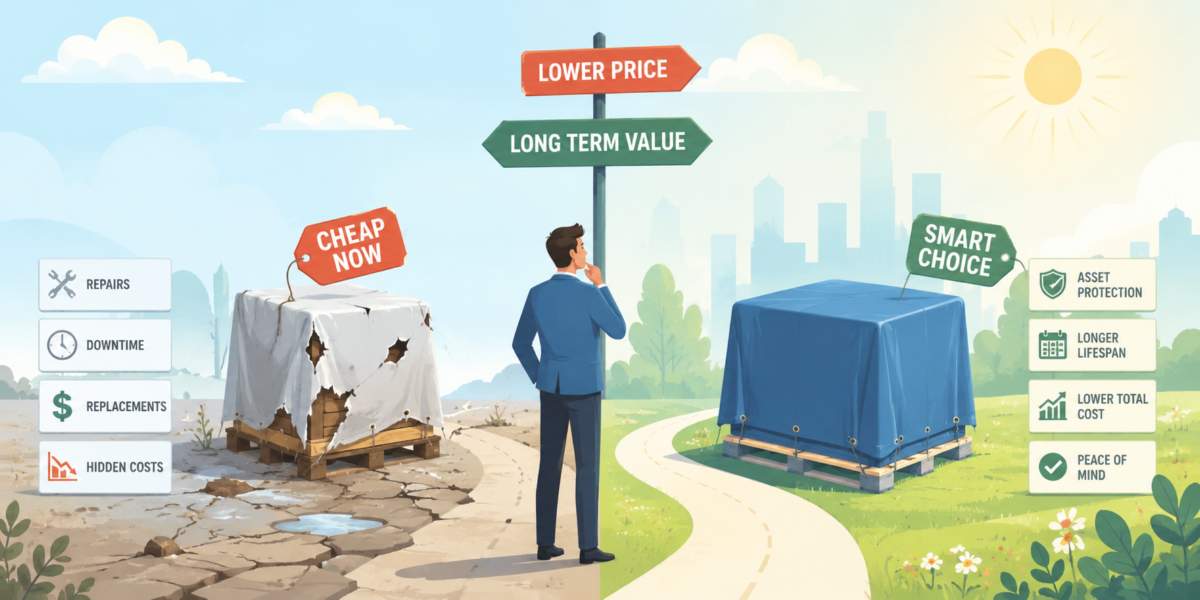 A bargain protective solution rarely announces its true price on the invoice. It prefers a slower reveal. First comes the minor tear, then the awkward repair, then the damaged asset beneath it, and finally the meeting where someone says, "Well, technically, it was approved by procurement." Nobody enjoys that meeting.
For procurement professionals, low upfront cost can look attractive, especially when budgets are tight and multiple departments are competing for spend. A cheaper cover, sheet, barrier, or enclosure may appear to satisfy the requirement on paper. It has the right basic dimensions. It claims to resist weather. It arrives in a box. Everyone briefly feels efficient.
Then real conditions get involved.
Purchase Price Is Only the First Chapter
The mistake is treating price as the full cost. In business purchasing, the invoice is simply where the story begins. Protective products are usually bought to prevent something more expensive from happening: asset damage, contamination, corrosion, downtime, safety incidents, or premature replacement.If the protective solution fails early, the business may pay several times over. There is the cost of replacement. There is labour time spent fitting, removing, repairing, and refitting. There may be damage to machinery, stock, vehicles, flooring, equipment, or materials. There may also be operational disruption, which tends to arrive wearing steel-toe boots and carrying a clipboard.
A low-cost option can be perfectly reasonable when the risk is low, the use is temporary, and the environment is predictable. The problem starts when a product designed for light-duty use is expected to perform like a hardened industrial solution. That is not procurement efficiency. That is asking a paper umbrella to negotiate with a storm.
Downtime Has a Habit of Being Impolite
When protective solutions fail, they rarely do it at a convenient time. They do not wait until the end of the quarter, after the audit, or during a quiet Wednesday when everyone has had enough coffee. They fail during transport, overnight storage, live operations, bad weather, or just before a client visit.Downtime is where cheap decisions often become expensive quickly. A damaged component may delay a project. Exposed materials may need inspection or disposal. A vehicle or machine may be unavailable while repairs are carried out. Staff may be pulled away from productive work to solve a problem that better specification could have prevented.
For procurement teams, this matters because the cheapest compliant-looking option may shift cost elsewhere in the organisation. Operations absorbs the disruption. Maintenance inherits the repairs. Finance sees replacement spend rise. Procurement may still have achieved the lowest unit price, but the business has not achieved the lowest cost.
Looking Beyond the Unit Cost
A more effective purchasing approach evaluates the entire lifecycle of a protective product rather than focusing solely on acquisition cost. This means asking questions that extend beyond the quotation itself.- How long is the product expected to last in its intended environment?
- What maintenance requirements will it create?
- How resistant is it to weather, abrasion, chemicals, or UV exposure?
- What are the consequences if it fails unexpectedly?
- How frequently will replacement be required?
- Will it protect assets consistently throughout its service life?
This is particularly relevant for businesses managing large estates, vehicle fleets, construction sites, manufacturing facilities, or outdoor storage areas. Small savings multiplied across hundreds of purchases can appear impressive on a spreadsheet. Unfortunately, small failures multiplied across hundreds of assets can also become impressive, just in a much less enjoyable way.
Asset Protection Is Risk Management
Protective products should not be viewed as simple consumables. In many cases, they function as part of an organisation's risk-management strategy.When equipment remains protected from environmental exposure, it typically lasts longer and performs more reliably. When materials are properly shielded during storage or transport, businesses reduce waste and avoid unnecessary replacement costs. When infrastructure is protected from wear and damage, maintenance schedules become more predictable.
The financial impact of these benefits can be substantial. A protective solution that prevents even a single incident of major asset damage may justify its cost many times over. Yet those avoided costs rarely appear as visibly as the initial purchase price, which is why they are sometimes overlooked during procurement decisions.
Strong procurement practices recognise that preventing a problem is often far cheaper than fixing one. Repair budgets may attract attention, but avoiding the repair altogether is usually the better outcome.
A Framework for Smarter Procurement Decisions
Procurement teams seeking long-term value can benefit from a structured evaluation process.Start by identifying the true purpose of the protective solution. Is it safeguarding a high-value asset? Supporting compliance requirements? Reducing maintenance demands? Protecting business continuity?
Next, assess the operating environment realistically. Outdoor exposure, heavy handling, frequent movement, temperature fluctuations, and chemical contact all place different demands on materials and construction quality.
Finally, compare options using total cost of ownership rather than purchase price alone. Include expected lifespan, maintenance requirements, replacement frequency, installation costs, and potential operational risks.
This broader perspective often changes the conversation. What initially appeared to be the cheapest option may prove to be one of the most expensive choices over the life of the asset.
Covering All the Bases
Cost-conscious procurement remains an important business discipline. Organisations should absolutely seek competitive pricing and avoid unnecessary expenditure. However, there is a significant difference between reducing costs and simply buying the cheapest available option.Protective solutions exist to prevent larger financial losses. When they perform reliably, they often go unnoticed, which is exactly what businesses want. Assets remain protected, operations continue smoothly, and maintenance teams find fewer unpleasant surprises waiting for them on Monday morning.
The most successful procurement decisions balance price, performance, durability, and risk. Viewed through that lens, the lowest initial cost is not always the lowest overall cost. Sometimes the cheapest product on the quote sheet turns out to be the most ambitious spender in the entire budget.
Article kindly provided by duratex.co.uk
Latest Articles
- Why a Plumbing Company's Google Reviews Matter More Than Its Advertising Budget in 2026
- Why Business Parks Should Think Twice Before Removing Their Mature Trees
- Why the Quietest Toilet in the Building Could Be Wasting the Most Water
- Could Someone Understand Compliance Six Months After It's Written?
- How Much CNC Capacity Is Hidden in Setup Time?
- How to Test a New Freelancer Without Handing Over Your Whole Project
- From CAD File to Finished Component: How Procurement Teams Can Avoid Custom-Part Delays
- The Repair-or-Replace Calculation: When an Older Computer Is Still Worth Saving
- Why Commercial Roof Problems Often Start as Access Problems
- The Cybersecurity Weakness Most Businesses Overlook
- Waste Audits for Small Businesses: The Simple Exercise That Can Cut Costs
- Why Fitness Goals Fail at Work but Succeed at Home
- The Hidden Cost of Guessing What Your Competitors Are Doing
- Why the Best Commercial Sites Are Designed Around Traffic Flow Before Appearance
- Designing Offices That Still Work Five Years From Now
- Why the Most Successful Commercial Landscapes Prioritise Function Before Appearance
- How Businesses Can Stay Operational During Major Refurbishment Works
- Near Misses: The Most Valuable Workplace Incidents You're Probably Ignoring
- Choosing the Right Lifting Method Before Choosing the Equipment
- Why Visitors Ignore Half Your Homepage Within Three Seconds
- Sales and Marketing
- Human Resources
- Finance and Accounting
- Business Consulting
- Information Technology
- Supply Chain Management
- Manufacturing and Production
- Logistics and Transportation
- Risk Management
- Project Management
- Market Research
- Business Intelligence
- Customer Relationship Management
- Product Development
- Quality Assurance
- Outsourcing Services
- Procurement and Vendor Management
- Legal and Compliance
- Business Strategy
- Operations Management
- Leadership and Management
- Data Analytics
- Innovation and R&D
- Training and Development
- Ecommerce Solutions
- Public Relations
- Advertising and Promotion
- Branding and Identity
- Business Networking
- Event Management
- Office Environment