

The Cybersecurity Weakness Most Businesses Overlook
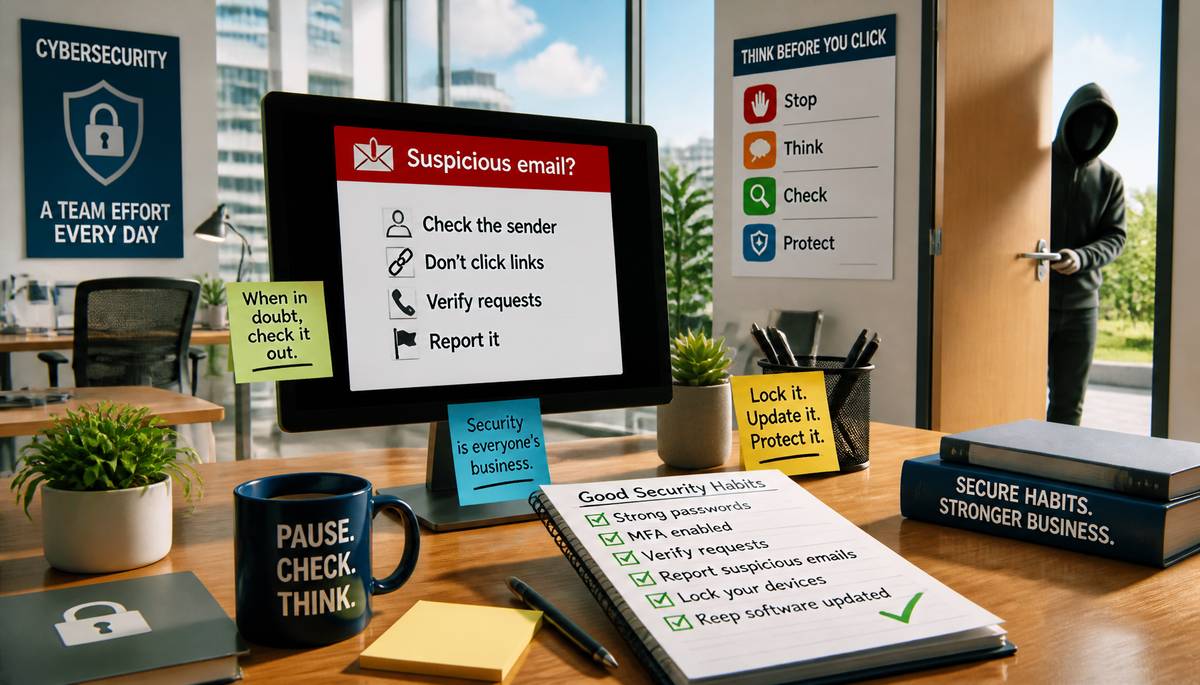 Technology budgets often resemble a shopping spree after too much coffee. A company proudly installs premium security software, renews every licence, upgrades firewalls, enables encryption and congratulates itself on being well protected. Then someone receives an email claiming to be from the managing director, clicks a suspicious link without a second thought and politely opens the front door for a cybercriminal. Thousands of pounds of sophisticated protection suddenly find themselves watching events unfold from the sidelines.
Cybersecurity rarely collapses because a business bought the wrong software. Much more often, it weakens through ordinary human behaviour repeated day after day. A rushed click here, a recycled password there, an attachment opened between meetings because lunch is waiting. None of these decisions seem dramatic in isolation, yet together they create opportunities that automated systems cannot always prevent.
Why Attackers Target People Instead of Computers
Criminals understand something many organisations forget. Computers generally follow instructions. People improvise.Breaking through a modern security system can require considerable expertise. Convincing someone to reveal a password or approve a fraudulent payment may require nothing more than a believable email and a little patience. That is why phishing campaigns remain remarkably successful despite years of public awareness.
Attackers study company websites, social media profiles and public announcements before crafting messages that appear entirely genuine. A fake invoice from a known supplier, a delivery notification or an urgent request from senior management can all seem perfectly reasonable during a busy afternoon.
Even experienced employees occasionally think, "I'll just deal with this quickly." Those five words have probably funded more criminal operations than anyone would care to calculate.
Small Habits Create Big Risks
Many security incidents begin with behaviour that hardly attracts attention.Examples include:
- Reusing the same password across multiple business systems.
- Leaving computers unlocked while making a quick coffee.
- Sharing login details with colleagues for convenience.
- Ignoring software update reminders for several weeks.
- Clicking links before checking where they actually lead.
- Saving sensitive files in unsecured locations.
Password reuse deserves particular attention. If one external website suffers a breach and an employee has used the same credentials elsewhere, criminals frequently try those identical details across business accounts. They know many people remain loyal to one favourite password for years, almost as though it were a treasured family recipe.
Pressure Often Beats Knowledge
Many organisations assume that awareness alone solves cybersecurity problems. If staff know what phishing looks like, surely they will never fall for it.Reality is less comforting.
Most employees already understand that suspicious emails exist. The challenge appears when workloads increase, deadlines tighten and dozens of messages compete for attention. Under pressure, people naturally make faster decisions. Fast decisions are useful when choosing sandwiches. They are rather less impressive when approving financial transfers or downloading unexpected attachments.
This is why organisations should focus on reducing rushed decision-making rather than expecting perfect judgement every single time. A workplace that encourages employees to pause, verify unusual requests and ask questions without embarrassment becomes considerably more resilient.
Security should never rely on everyone being flawless. It should rely on making sensible behaviour the easiest behaviour.
Building Security Into Everyday Work
Effective cybersecurity does not require turning every employee into a technical specialist. Most businesses achieve better results by making secure habits part of normal routines rather than treating security as a separate activity.Clear policies help, but they should be written for humans rather than lawyers. Staff are far more likely to follow straightforward guidance that explains what to do and why it matters. A short checklist beside a workstation often proves more valuable than a lengthy document hidden away on an internal server that nobody has opened since the office Christmas party three years ago.
Regular training also deserves a fresh approach. Annual presentations packed with slides and technical jargon rarely leave a lasting impression. Short, practical sessions throughout the year allow employees to recognise current threats, ask questions and discuss real situations they have encountered. Cybercriminals constantly adapt their tactics, so awareness should evolve as well.
Businesses can reinforce good habits by encouraging simple actions such as:
- Using password managers to generate unique credentials.
- Enabling multi-factor authentication wherever possible.
- Verifying unexpected payment requests through a second communication method.
- Reporting suspicious emails instead of simply deleting them.
- Locking devices whenever leaving a desk, even briefly.
- Installing software updates promptly.
Creating a Workplace Where Questions Are Welcome
One overlooked element of cybersecurity is company culture.Employees should never feel uncomfortable asking whether something looks suspicious. A workplace where people worry about appearing inexperienced often encourages silence, and silence can become expensive. It is far better for someone to ask ten cautious questions than confidently approve one fraudulent request.
Managers play an important role here. When leaders follow security procedures themselves, employees are much more likely to do the same. If senior staff bypass policies because they are "too busy," others quickly conclude that the rules are optional.
Positive reinforcement also helps. Recognising employees who identify phishing attempts or report unusual activity sends a clear message that vigilance is appreciated rather than inconvenient. Security becomes something everyone contributes to instead of something owned solely by the IT department.
Click Happens
No organisation can eliminate every cyber risk, regardless of how much it spends on technology. Software remains essential, but it performs best alongside informed employees who understand that their daily decisions matter just as much as the latest security tools.A business that encourages thoughtful habits, practical training and open communication creates multiple layers of protection that technology alone cannot provide. Firewalls, antivirus software and advanced monitoring systems all have important roles, yet they work far more effectively when supported by people who pause before clicking, verify before trusting and think before sharing sensitive information.
Cybersecurity is ultimately less about buying another product and more about building better routines. Expensive software may stop countless attacks, but everyday awareness often prevents the one incident that could have caused the greatest damage. A few extra moments of caution can save weeks of disruption, substantial financial losses and the uncomfortable experience of explaining to everyone why the company password turned out to be "Password123!" after all.
Article kindly provided by netitude.co.uk
Latest Articles
- Why a Plumbing Company's Google Reviews Matter More Than Its Advertising Budget in 2026
- Why Business Parks Should Think Twice Before Removing Their Mature Trees
- Why the Quietest Toilet in the Building Could Be Wasting the Most Water
- Could Someone Understand Compliance Six Months After It's Written?
- How Much CNC Capacity Is Hidden in Setup Time?
- How to Test a New Freelancer Without Handing Over Your Whole Project
- From CAD File to Finished Component: How Procurement Teams Can Avoid Custom-Part Delays
- The Repair-or-Replace Calculation: When an Older Computer Is Still Worth Saving
- Why Commercial Roof Problems Often Start as Access Problems
- The Cybersecurity Weakness Most Businesses Overlook
- Waste Audits for Small Businesses: The Simple Exercise That Can Cut Costs
- Why Fitness Goals Fail at Work but Succeed at Home
- The Hidden Cost of Guessing What Your Competitors Are Doing
- Why the Best Commercial Sites Are Designed Around Traffic Flow Before Appearance
- Designing Offices That Still Work Five Years From Now
- Why the Most Successful Commercial Landscapes Prioritise Function Before Appearance
- How Businesses Can Stay Operational During Major Refurbishment Works
- Near Misses: The Most Valuable Workplace Incidents You're Probably Ignoring
- Choosing the Right Lifting Method Before Choosing the Equipment
- Why Visitors Ignore Half Your Homepage Within Three Seconds
- Sales and Marketing
- Human Resources
- Finance and Accounting
- Business Consulting
- Information Technology
- Supply Chain Management
- Manufacturing and Production
- Logistics and Transportation
- Risk Management
- Project Management
- Market Research
- Business Intelligence
- Customer Relationship Management
- Product Development
- Quality Assurance
- Outsourcing Services
- Procurement and Vendor Management
- Legal and Compliance
- Business Strategy
- Operations Management
- Leadership and Management
- Data Analytics
- Innovation and R&D
- Training and Development
- Ecommerce Solutions
- Public Relations
- Advertising and Promotion
- Branding and Identity
- Business Networking
- Event Management
- Office Environment