

Designing Offices That Still Work Five Years From Now
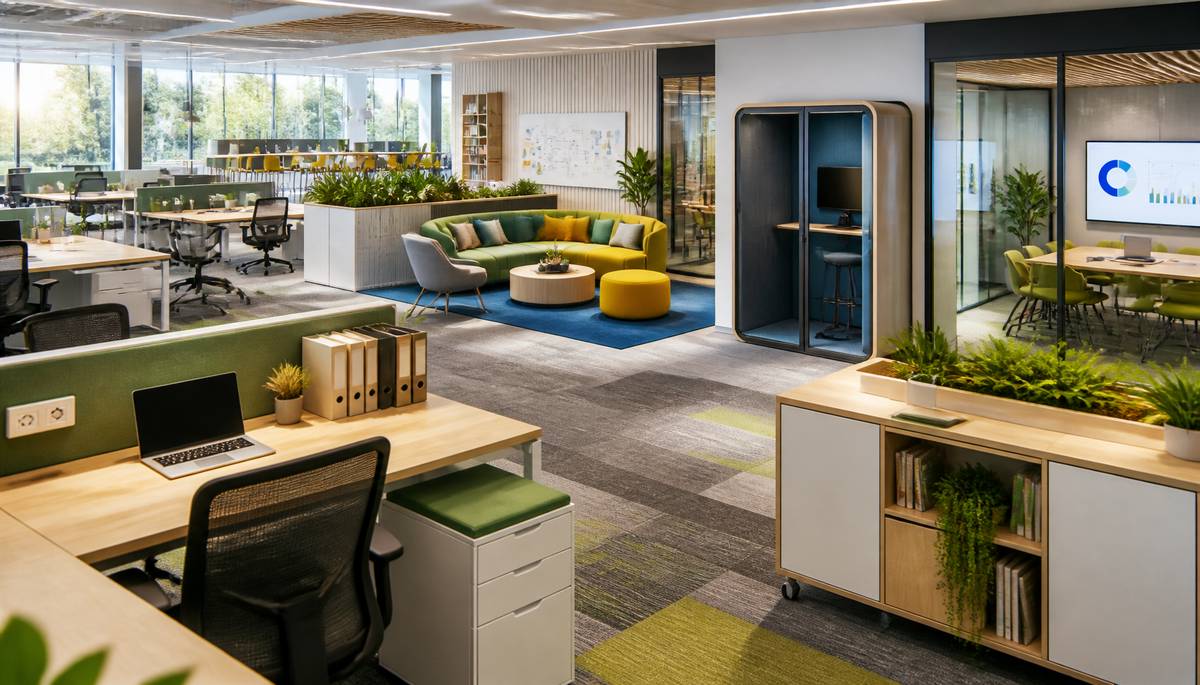 Modern offices have developed a curious habit of becoming outdated almost as quickly as last year's smartphone. One month a layout feels fresh and efficient, and the next someone is asking where the video conferencing booth can fit, why there are not enough charging points, or whether half the desks should disappear because hybrid working has become the norm. Planning an office that can adapt is no longer a luxury. It is one of the smartest investments a business can make.
Creating a workspace with longevity does not mean predicting every trend that might arrive over the next five years. Nobody expects a crystal ball balanced next to the office printer. Instead, it involves making thoughtful decisions that allow spaces to evolve without demanding expensive rebuilding projects every time the business changes direction.
Adaptability Beats Perfection
Many office designs are built around today's team structure, current technology and existing workflow. That sounds sensible until the company hires another twenty employees, introduces new equipment or changes how departments interact. Suddenly, yesterday's perfect layout becomes tomorrow's obstacle course.Flexible planning starts by accepting that change is inevitable. Rather than squeezing every square metre into a single fixed purpose, businesses benefit from creating areas that can serve multiple functions. A collaborative space today might become a client presentation room next year, followed by a training area later without requiring walls to be demolished.
Movable partitions, lightweight furnishings and adaptable lighting all contribute to this approach. These features allow businesses to respond quickly without disrupting daily operations or committing to lengthy renovation projects.
Furniture That Refuses to Retire Early
Office furniture should not have the career lifespan of a carton of milk. Choosing modular systems allows desks, storage units and seating arrangements to grow alongside the organisation instead of being replaced whenever requirements shift.Modular furniture offers several practical advantages.
- Desks can be rearranged as departments expand or shrink.
- Storage units can be relocated without creating awkward gaps.
- Meeting areas can increase or decrease in size with minimal effort.
- Damaged components can often be replaced individually rather than replacing complete furniture sets.
Meeting Spaces That Keep Their Options Open
Few parts of an office have changed more dramatically than meeting rooms. Large boardrooms designed for lengthy presentations now often sit empty while smaller rooms struggle to accommodate spontaneous discussions or virtual meetings.Designing several different meeting environments creates a far more resilient workplace. Quiet booths for video calls, medium-sized collaboration rooms and larger presentation spaces each support different working styles. Technology should also be considered from the beginning rather than treated as an afterthought.
Power outlets, display screens, acoustic treatment and reliable connectivity should be integrated into the design so future upgrades become straightforward instead of requiring cables to snake mysteriously across the carpet like determined electronic vines.
Planning Infrastructure Before It Becomes Urgent
Many expensive office refurbishments begin with a surprisingly simple sentence: "We need another socket."Infrastructure planning rarely attracts much excitement during the design stage, yet it often determines how adaptable an office remains over time. Electrical capacity, network cabling, ventilation systems and lighting layouts should all anticipate future demands rather than simply meeting today's requirements.
Businesses continue introducing new devices, smarter building technologies and increasingly sophisticated communication systems. Leaving room for additional capacity helps prevent disruptive upgrades that interrupt productivity and inflate costs.
Careful planning behind walls, beneath floors and above ceilings may never receive compliments from visitors, but it quietly supports every visible part of a successful workplace.
Supporting Different Ways of Working
Office life rarely follows a single routine anymore. One employee may spend the morning analysing data in complete silence, another may be brainstorming with colleagues, while someone else is presenting to clients halfway around the world through a video call. Designing a workplace that supports these different activities makes the office far more resilient as working habits continue to evolve.Instead of assigning every area one permanent purpose, businesses can benefit from creating zones that naturally encourage different types of work. Quiet areas help concentration, open collaborative spaces encourage discussion, and informal breakout areas often become the birthplace of surprisingly good ideas. It turns out that inspiration occasionally arrives while someone is deciding whether the last biscuit is fair game.
Providing employees with choices also improves comfort. People can select the environment that best suits the task at hand rather than trying to force every activity into the same setting.
Technology Should Blend Into the Background
The most effective workplace technology is often the least noticeable. Staff should be able to connect devices, share presentations and join meetings without hunting for adaptors that vanished sometime during the previous financial year.Planning for future technology means allowing sufficient power distribution, accessible cable management and infrastructure that accommodates equipment not yet purchased. Wireless charging, flexible monitor mounting systems and scalable network capacity can all extend the useful life of an office without locking the business into specific hardware.
This approach reduces disruption whenever equipment is upgraded. Instead of redesigning rooms around new technology, the technology simply slots into a workplace that was already prepared for change.
Choosing Materials That Age Gracefully
Durability should never be confused with dullness. High-quality flooring, finishes and furniture materials often retain their appearance for years while requiring less maintenance than cheaper alternatives.Commercial interiors experience constant use, with chairs rolling across floors, meeting rooms welcoming a steady stream of visitors and communal spaces remaining busy throughout the day. Selecting robust materials helps preserve a professional appearance while reducing replacement costs.
It is equally worthwhile to consider maintenance requirements during the design stage. Surfaces that are easy to clean, lighting that can be serviced efficiently and finishes that resist everyday wear all contribute to lower operating costs over the long term.
Future Proof by Design
Designing an office for the next five years is less about guessing tomorrow's trends and more about preparing for change with confidence. Adaptable layouts, modular furniture, flexible meeting spaces and carefully planned infrastructure give businesses room to grow without repeatedly starting from scratch.A workplace should evolve alongside the organisation it supports. When thoughtful planning forms the foundation, future adjustments become manageable projects rather than disruptive overhauls. That means fewer unexpected renovation bills, happier employees and a workspace ready to handle whatever the coming years decide to throw through the front door—hopefully after signing in at reception first.
Article kindly provided by aquariusinteriors.co.uk
Latest Articles
- Why the Quietest Toilet in the Building Could Be Wasting the Most Water
- Could Someone Understand Compliance Six Months After It's Written?
- How Much CNC Capacity Is Hidden in Setup Time?
- How to Test a New Freelancer Without Handing Over Your Whole Project
- From CAD File to Finished Component: How Procurement Teams Can Avoid Custom-Part Delays
- The Repair-or-Replace Calculation: When an Older Computer Is Still Worth Saving
- Why Commercial Roof Problems Often Start as Access Problems
- The Cybersecurity Weakness Most Businesses Overlook
- Waste Audits for Small Businesses: The Simple Exercise That Can Cut Costs
- Why Fitness Goals Fail at Work but Succeed at Home
- The Hidden Cost of Guessing What Your Competitors Are Doing
- Why the Best Commercial Sites Are Designed Around Traffic Flow Before Appearance
- Designing Offices That Still Work Five Years From Now
- Why the Most Successful Commercial Landscapes Prioritise Function Before Appearance
- How Businesses Can Stay Operational During Major Refurbishment Works
- Near Misses: The Most Valuable Workplace Incidents You're Probably Ignoring
- Choosing the Right Lifting Method Before Choosing the Equipment
- Why Visitors Ignore Half Your Homepage Within Three Seconds
- Why Most Cybersecurity Conversations Ignore the Biggest Vulnerability: Everyday Workflow Habits
- What Your Workplace Is Communicating Before Anyone Says a Word
- Sales and Marketing
- Human Resources
- Finance and Accounting
- Business Consulting
- Information Technology
- Supply Chain Management
- Manufacturing and Production
- Logistics and Transportation
- Risk Management
- Project Management
- Market Research
- Business Intelligence
- Customer Relationship Management
- Product Development
- Quality Assurance
- Outsourcing Services
- Procurement and Vendor Management
- Legal and Compliance
- Business Strategy
- Operations Management
- Leadership and Management
- Data Analytics
- Innovation and R&D
- Training and Development
- Ecommerce Solutions
- Public Relations
- Advertising and Promotion
- Branding and Identity
- Business Networking
- Event Management
- Office Environment