

Choosing the Right Lifting Method Before Choosing the Equipment
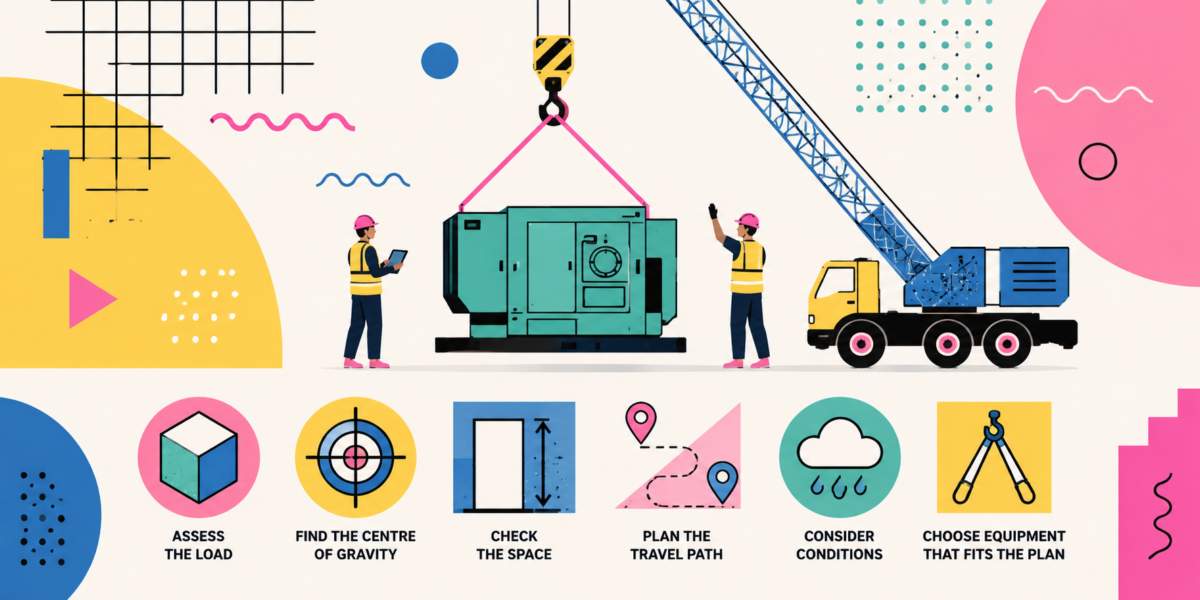 A heavy load has no interest in deadlines, budgets, or optimistic guesses. It simply obeys the laws of physics. That reality is why successful lifting operations begin long before anyone selects a sling, hoist, crane, or jack. The smartest approach is to determine the lifting method first and then choose equipment that supports that plan.
Too often, organisations purchase or hire lifting gear before fully understanding the task. The result can be unnecessary costs, inefficient workflows, and, in some cases, significant safety risks. By evaluating the load, the environment, and the intended movement path before selecting equipment, lifting operations become far more predictable and effective.
Start with the Load, Not the Catalogue
Every lifting plan revolves around the load itself. Weight matters, but it is only one part of the picture. The shape of a load can dramatically influence how it should be lifted. A balanced steel plate presents different challenges from an awkward machine with protruding components, uneven dimensions, or fragile surfaces. Two loads may weigh exactly the same, yet require completely different lifting methods.Important details include overall dimensions, weight distribution, structural strength, available lifting points, surface sensitivity, and whether any internal parts could move during handling. A machine may look solid from the outside, then behave like a wardrobe full of bowling balls once tilted. That is not the moment to discover the original plan was mostly confidence wearing a hard hat.
Respect the Centre of Gravity
The centre of gravity is one of the most important parts of any lift. If it is not understood, the load can tilt, swing, rotate, or place unexpected force on one side of the lifting arrangement. This can damage the load, overload equipment, or create dangerous conditions for people nearby.A safe lifting method should account for where the true balance point sits, not where it appears to sit. Irregular loads, offset motors, tanks with residue, and machinery with heavier components on one side all need careful assessment. In many cases, trial lifts should be slow, controlled, and kept close to the ground before the full movement begins.
Measure the Space Before Making the Plan
Available space often decides the lifting method before equipment choice even enters the conversation. A crane may be ideal in theory, but useless if there is no overhead clearance. A forklift may have enough capacity, yet still be unsuitable if turning space is tighter than a queue at the coffee machine.Doorways, ceiling height, floor condition, access points, slopes, nearby structures, and escape routes all matter. The best lifting method is not simply the strongest one. It is the one that can safely operate within the real working area.
Plan the Travel Path Before the Lift Begins
Many lifting projects focus heavily on getting a load off the ground and not nearly enough on where it needs to go afterwards. Yet the travel path is often where complications emerge. A load that can be lifted safely may still encounter obstacles, tight corners, uneven flooring, overhead services, or restricted access points during transport.Every stage of movement should be mapped before equipment is selected. Consider the starting position, intermediate stops, final destination, and any changes in elevation. If the load must travel through multiple areas, each section should be assessed individually.
This planning process often reveals opportunities to simplify the operation. Sometimes a combination of skates and hydraulic jacks may prove more practical than a large crane. In other situations, breaking a movement into smaller stages can reduce risk and improve control. The shortest route is not always the safest route, particularly when that route resembles an obstacle course designed by someone with a grudge against logistics.
Environmental Conditions Change Everything
Environmental factors can significantly influence lifting strategy. Wind, rain, temperature, dust, lighting conditions, and ground stability all affect how a load should be handled.Outdoor lifts require particular attention. Wind can place additional forces on large loads, especially those with broad surface areas. What appears stable on the ground may behave very differently once suspended. A large panel or container can suddenly discover aerodynamic ambitions that nobody included in the project plan.
Ground conditions are equally important. Soft terrain, uneven surfaces, and underground voids can affect equipment stability. Before selecting lifting equipment, it is essential to verify that the operating environment can safely support both the equipment and the load.
Indoor environments present their own challenges. Low ceilings, restricted visibility, congested work areas, and nearby operations can all influence the choice of lifting method. A successful plan considers these factors from the beginning rather than attempting to solve them halfway through the job.
Select Equipment That Supports the Method
Once the lifting method has been fully developed, equipment selection becomes far more straightforward. Rather than choosing equipment first and forcing the task to fit, the equipment is selected to support an already established strategy.This approach often leads to better decisions regarding:
- Lifting devices and machinery
- Sling types and configurations
- Shackles and connectors
- Spreader beams
- Load control systems
- Positioning and transport equipment
Raising Standards Without Raising Problems
Effective lifting operations begin with analysis, not equipment specifications. Understanding the load shape, centre of gravity, available space, travel path, and environmental conditions provides the foundation for a safe and efficient plan.When lifting methods are determined before equipment is chosen, projects tend to run more smoothly, resources are used more effectively, and risks become easier to control. Physics remains firmly in charge, but careful planning ensures it stays a cooperative partner rather than an enthusiastic critic.
Article kindly provided by liftingequipmentstore.com
Latest Articles
- From CAD File to Finished Component: How Procurement Teams Can Avoid Custom-Part Delays
- The Repair-or-Replace Calculation: When an Older Computer Is Still Worth Saving
- Why Commercial Roof Problems Often Start as Access Problems
- The Cybersecurity Weakness Most Businesses Overlook
- Waste Audits for Small Businesses: The Simple Exercise That Can Cut Costs
- Why Fitness Goals Fail at Work but Succeed at Home
- The Hidden Cost of Guessing What Your Competitors Are Doing
- Why the Best Commercial Sites Are Designed Around Traffic Flow Before Appearance
- Designing Offices That Still Work Five Years From Now
- Why the Most Successful Commercial Landscapes Prioritise Function Before Appearance
- How Businesses Can Stay Operational During Major Refurbishment Works
- Near Misses: The Most Valuable Workplace Incidents You're Probably Ignoring
- Choosing the Right Lifting Method Before Choosing the Equipment
- Why Visitors Ignore Half Your Homepage Within Three Seconds
- Why Most Cybersecurity Conversations Ignore the Biggest Vulnerability: Everyday Workflow Habits
- What Your Workplace Is Communicating Before Anyone Says a Word
- Planning an Office Renovation? Why Drywall Decisions Impact More Than Just the Walls
- The False Economy of Low-Cost Protective Solutions
- The Valuable Materials Hiding in Everyday Electronics
- The Hidden SEO Asset Most Small Businesses Ignore: Why Directory Listings Still Matter
- Sales and Marketing
- Human Resources
- Finance and Accounting
- Business Consulting
- Information Technology
- Supply Chain Management
- Manufacturing and Production
- Logistics and Transportation
- Risk Management
- Project Management
- Market Research
- Business Intelligence
- Customer Relationship Management
- Product Development
- Quality Assurance
- Outsourcing Services
- Procurement and Vendor Management
- Legal and Compliance
- Business Strategy
- Operations Management
- Leadership and Management
- Data Analytics
- Innovation and R&D
- Training and Development
- Ecommerce Solutions
- Public Relations
- Advertising and Promotion
- Branding and Identity
- Business Networking
- Event Management
- Office Environment