

Why the Best Commercial Sites Are Designed Around Traffic Flow Before Appearance
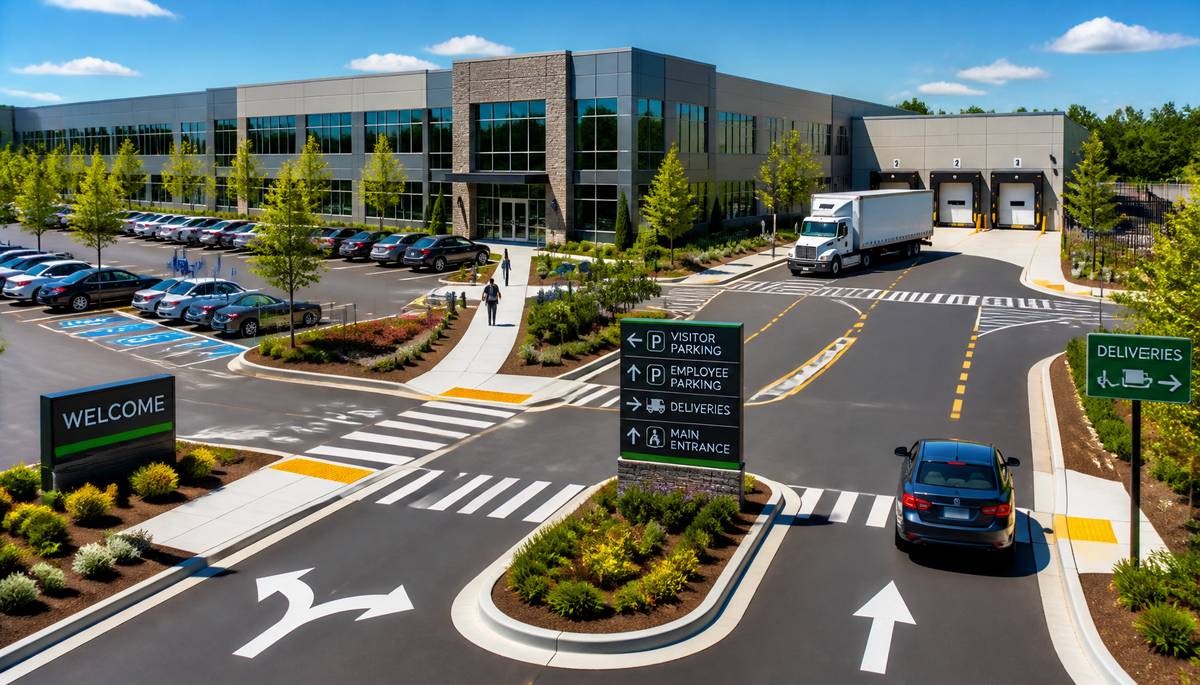 Every successful commercial property tells a story before anyone walks through the front door. It begins in the parking lot, continues along the sidewalks, passes loading areas, and finishes at the entrance. Customers, suppliers, employees, and delivery drivers all judge a site within moments of arriving, often without consciously noticing why one location feels effortless while another feels like a maze designed by someone who held a grudge against directional arrows.
Visual appeal certainly matters, but appearance should never be the first priority during planning. A beautiful entrance loses much of its charm if delivery trucks block customer parking, pedestrians dodge reversing vans, or vehicles queue because exits are awkwardly positioned. Commercial sites work best when movement feels natural rather than forced, allowing everyone to reach their destination without needing detective-level navigation skills.
Movement Creates First Impressions
People often associate attractive buildings with professionalism, yet ease of movement frequently has an even greater influence on overall perception. Visitors may not remember the exact shade of paving or the style of landscaping, but they will remember spending ten frustrating minutes searching for visitor parking or waiting while a truck performs what seems to be its eighteenth attempt at reversing.Well-planned traffic flow quietly removes obstacles from the customer experience. Clear entrances, logical parking layouts, visible pedestrian crossings, and sensible exit routes all contribute to an environment that feels organised and welcoming. Nobody celebrates efficient traffic circulation out loud, but plenty of people notice when it is missing.
Businesses also benefit internally. Staff spend less time navigating congested parking areas, deliveries arrive more smoothly, and emergency access remains available when needed. These improvements rarely appear on glossy brochures, yet they influence daily operations far more than decorative paving patterns ever could.
Separating Vehicles and People Makes Sense
Commercial properties often serve multiple groups simultaneously. Employees arrive for work, customers come and go throughout the day, suppliers unload goods, contractors visit temporarily, and maintenance teams perform scheduled tasks. Expecting everyone to share identical routes is asking for unnecessary confusion.Pedestrian walkways should be obvious, continuous, and comfortably separated from busy vehicle areas wherever practical. Crossings deserve careful placement so people naturally use them instead of inventing shortcuts across active traffic lanes. Human beings possess an extraordinary talent for finding the quickest route, even when that route seems to challenge common sense.
Vehicle routes should also minimise conflicting movements. Separate entry and exit points, generous turning areas, and predictable traffic patterns reduce hesitation and improve safety. Drivers make better decisions when layouts communicate clearly instead of presenting a puzzle worthy of an escape room.
Delivery Access Deserves Early Planning
Deliveries keep many commercial operations running, yet loading areas sometimes receive surprisingly little attention during the planning stage.Large vehicles require generous turning circles, adequate clearance, and unobstructed access. If delivery trucks regularly block customer entrances or occupy valuable parking spaces while unloading, operational efficiency quickly suffers. Even businesses with relatively modest delivery schedules benefit from designing dedicated service areas that reduce disruption.
Planning for future growth is equally valuable. A business may currently receive only a handful of deliveries each week, but expansion can rapidly increase vehicle movements. Allowing room for larger vehicles, additional loading activity, or revised circulation patterns helps avoid expensive redesigns later.
Parking Layouts Should Work With Human Nature
A parking lot is more than a collection of painted rectangles. It acts as the opening chapter of every visit and often determines whether arriving feels effortless or unnecessarily stressful. Even the most impressive commercial premises can leave a poor impression if drivers immediately encounter confusing one-way systems, awkward dead ends, or spaces that require the flexibility of a circus performer to enter.Effective parking layouts encourage predictable behaviour rather than fighting against it. Clearly marked entrances and exits, sensible aisle widths, logical traffic direction, and well-positioned accessible spaces all contribute to smoother circulation. Visitors should instinctively understand where to drive without relying on guesswork or following another vehicle that may be just as lost.
Parking should also accommodate different types of users. Customers may only stay for a short visit, while employees occupy spaces throughout the day. Contractors, delivery vehicles, and service technicians often have entirely different requirements. Recognising these differences during the design stage helps prevent conflicts that become daily frustrations once the site is operational.
Planning Today Prevents Expensive Changes Tomorrow
Traffic patterns rarely remain unchanged forever. Businesses expand, customer numbers increase, new equipment arrives, and neighbouring developments can alter how vehicles approach a property. Designing solely for today's needs often means tomorrow's improvements involve unnecessary disruption and expense.Allowing additional space where practical provides flexibility for future modifications. Wider access routes, reserved areas for possible parking expansion, and infrastructure that accommodates changing operational needs can save considerable time and money years later. Forward thinking rarely attracts much attention on opening day, but it becomes highly appreciated when growth arrives without creating logistical headaches.
Site planning should also consider maintenance access. Equipment occasionally needs replacing, landscaping requires care, and utility providers may need access to underground services. Creating routes that support these activities reduces interruptions to normal business operations and keeps maintenance crews from inventing creative parking techniques that become legendary for all the wrong reasons.
Following the Right Direction
Commercial success depends on far more than attractive architecture. Sites that prioritise efficient traffic flow create safer environments, improve operational efficiency, support positive customer experiences, and reduce avoidable long-term costs. Every driveway, walkway, parking space, and loading area contributes to how smoothly a business functions long after construction has finished.Appearance certainly has its place, but practical design provides the foundation that allows visual features to shine. When vehicles move predictably, pedestrians feel safe, deliveries occur without disruption, and visitors arrive without unnecessary frustration, the entire property performs more effectively. That thoughtful planning often goes unnoticed—and that is perhaps the greatest compliment any commercial site can receive.
Article kindly provided by hugosconcrete.com
Latest Articles
- Why the Quietest Toilet in the Building Could Be Wasting the Most Water
- Could Someone Understand Compliance Six Months After It's Written?
- How Much CNC Capacity Is Hidden in Setup Time?
- How to Test a New Freelancer Without Handing Over Your Whole Project
- From CAD File to Finished Component: How Procurement Teams Can Avoid Custom-Part Delays
- The Repair-or-Replace Calculation: When an Older Computer Is Still Worth Saving
- Why Commercial Roof Problems Often Start as Access Problems
- The Cybersecurity Weakness Most Businesses Overlook
- Waste Audits for Small Businesses: The Simple Exercise That Can Cut Costs
- Why Fitness Goals Fail at Work but Succeed at Home
- The Hidden Cost of Guessing What Your Competitors Are Doing
- Why the Best Commercial Sites Are Designed Around Traffic Flow Before Appearance
- Designing Offices That Still Work Five Years From Now
- Why the Most Successful Commercial Landscapes Prioritise Function Before Appearance
- How Businesses Can Stay Operational During Major Refurbishment Works
- Near Misses: The Most Valuable Workplace Incidents You're Probably Ignoring
- Choosing the Right Lifting Method Before Choosing the Equipment
- Why Visitors Ignore Half Your Homepage Within Three Seconds
- Why Most Cybersecurity Conversations Ignore the Biggest Vulnerability: Everyday Workflow Habits
- What Your Workplace Is Communicating Before Anyone Says a Word
- Sales and Marketing
- Human Resources
- Finance and Accounting
- Business Consulting
- Information Technology
- Supply Chain Management
- Manufacturing and Production
- Logistics and Transportation
- Risk Management
- Project Management
- Market Research
- Business Intelligence
- Customer Relationship Management
- Product Development
- Quality Assurance
- Outsourcing Services
- Procurement and Vendor Management
- Legal and Compliance
- Business Strategy
- Operations Management
- Leadership and Management
- Data Analytics
- Innovation and R&D
- Training and Development
- Ecommerce Solutions
- Public Relations
- Advertising and Promotion
- Branding and Identity
- Business Networking
- Event Management
- Office Environment