

Why Commercial Roof Problems Often Start as Access Problems
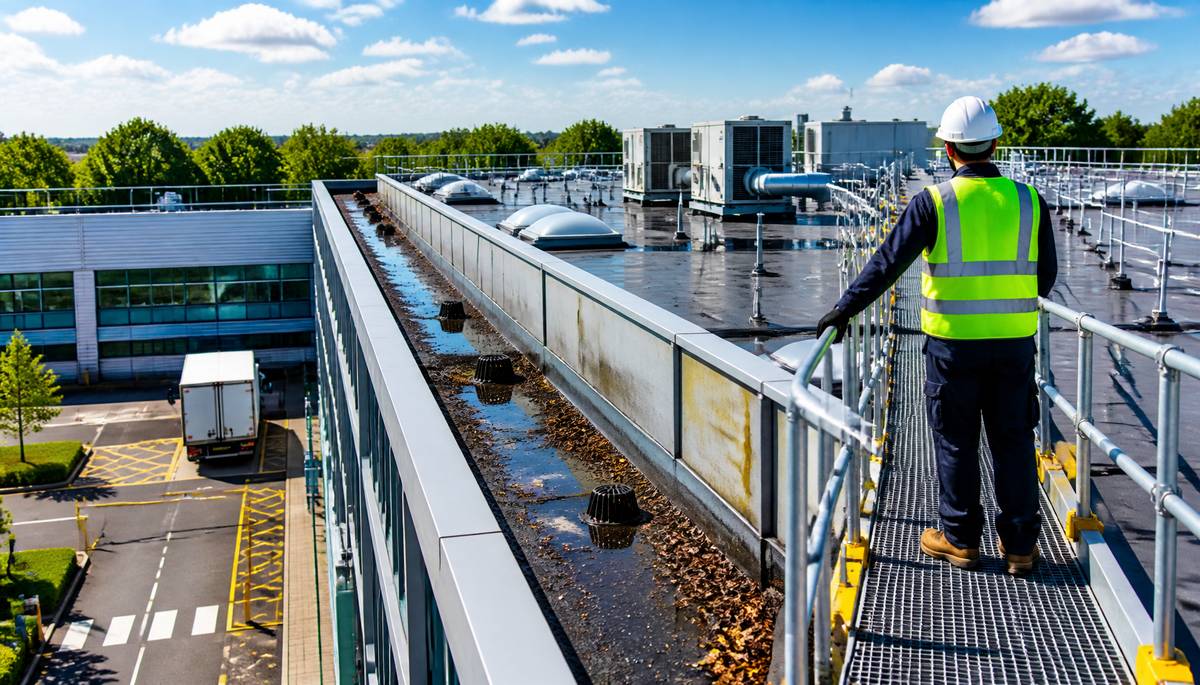 A commercial roof can look perfectly respectable from the ground while quietly preparing an invoice capable of upsetting an otherwise calm facilities meeting. The trouble is rarely that a minor fault is impossible to spot; it is that spotting it properly requires safe, practical access. When reaching a gutter, roof edge, drainage outlet or air-conditioning unit becomes awkward, inspections are delayed, abbreviated or quietly removed from the maintenance schedule altogether.
That is how a handful of leaves, a loose flashing or a slow drain can gain months of uninterrupted opportunity. Water does not need a dramatic invitation. Given time, it will find a joint, a crack, an aged seal or a route around a poorly maintained outlet, then make itself unexpectedly relevant to the office below.
Small Defects Prefer Privacy
High-level areas are easy to neglect because they are out of sight during the ordinary business day. Staff may notice a blocked entrance, a broken handrail or an overflowing bin immediately. A gutter full of debris several metres above a loading bay is less likely to attract attention until rainwater starts running down cladding or appearing inside the building.Commercial roofs also have more going on than many people realise. Drainage outlets, parapet gutters, rooflights, ventilation terminals, solar equipment, cable runs and plant units all create places where debris can collect or components can deteriorate. Each item may be modest on its own. Together, they turn the roof into a maintenance area rather than merely a large lid.
A blocked outlet is a good example. At first, it may only cause water to drain more slowly after rainfall. Later, standing water can place additional stress on roof coverings and seams. During a heavy downpour, the problem may develop into overflow, internal leaks, damaged ceiling finishes, disruption to stock or equipment, and a great deal of interest from people who had not previously thought about roof drainage.
Risky Shortcuts Are Not Maintenance Plans
When proper access is inconvenient, there can be pressure to “just have a quick look.” That phrase has an impressive history of making simple tasks considerably less simple. Ladders used beyond their appropriate purpose, improvised routes onto roofs, and untrained staff attempting elevated checks can create a safety problem far more serious than the defect being investigated.Facilities managers need reliable information, not a hurried glance from an unsuitable position. Can the gutter actually be inspected? Is the roof edge visible? Can plant equipment be reached without stepping around cables, fragile surfaces or uneven areas? If the answer is uncertain, the inspection is unlikely to provide the reassurance it appears to offer.
Safe access also matters because proper checks take time. An experienced contractor can inspect drainage, sealant, fixings, edges and equipment methodically, rather than treating the visit as a balancing exercise with a clipboard. The goal is not simply to reach the roof. It is to leave with an accurate picture of its condition and a clear record of anything requiring attention.
Plan Inspections Before Weather Makes the Appointment
A sensible maintenance programme gives high-level areas a regular place in the calendar. The frequency will depend on the building, its location, surrounding trees, roof design, age and the equipment installed above. A unit near mature trees or exposed to frequent windblown debris may need more attention than a simple roof in a sheltered industrial estate.It helps to plan inspections around seasonal pressure points. Checking drainage before prolonged wet weather is more useful than discovering its condition during a storm. Looking at roof edges and external equipment after high winds can identify loose materials before they become a hazard. Scheduling access in advance also gives managers more choice over timing, contractors and site arrangements.
A useful inspection plan should identify the areas to be checked, the access method required, the person responsible for arranging it and the evidence to be retained afterwards. Photographs, inspection notes and records of remedial work can be valuable when tracking recurring faults or explaining why a repair was authorised. Buildings have memories, although they tend to store them in damp patches.
Coordinate Access With Everyday Operations
Commercial properties cannot always stop functioning while maintenance takes place. Delivery vehicles need room, customers need safe routes, staff need access to entrances and emergency routes must remain clear. This makes early planning especially important when elevated work is required.Before booking an inspection or repair, consider practical details such as:
- Whether access equipment can be positioned safely without blocking key routes
- Where vehicles, pedestrians and deliveries will be diverted during the work
- Whether the work is better completed outside normal trading hours
- What ground conditions, overhead obstructions or parking restrictions may affect access
- How staff, tenants and visitors will be informed of the temporary changes
Keep Plant Equipment Within the Picture
Roof-mounted plant equipment deserves the same attention as the roof covering around it. Air-conditioning units, extraction systems, ventilation equipment and associated pipework can create leaks, obstruct drainage or require periodic servicing. If access is difficult, a minor issue around a unit may be left until it affects performance, damages the roof surface or leads to an urgent call-out.Coordinating roof checks with planned servicing can be particularly effective. A single properly arranged access visit may allow several high-level items to be inspected at once, reducing repeat disruption and helping contractors identify where one issue affects another. A drain blocked beside a plant unit, for example, is not merely a drainage matter if water is also reaching cables, supports or roof penetrations.
Access Granted to Prevention
Commercial roof maintenance is often treated as a repair issue, but access is the earlier decision that determines whether small defects remain small. If safe access is available when it is needed, managers can inspect vulnerable areas, clear debris, document faults and arrange modest repairs before water, weather and delay collaborate on something more expensive.The most effective approach is straightforward: treat gutters, roof edges, outlets and elevated plant equipment as active parts of the building, not distant territory to be considered only when a ceiling starts dripping. Timely inspections, suitable access and clear records protect the property, the people using it and the maintenance budget from unpleasant surprises above.
Article kindly provided by centralplatforms.co.uk
Latest Articles
- Why a Plumbing Company's Google Reviews Matter More Than Its Advertising Budget in 2026
- Why Business Parks Should Think Twice Before Removing Their Mature Trees
- Why the Quietest Toilet in the Building Could Be Wasting the Most Water
- Could Someone Understand Compliance Six Months After It's Written?
- How Much CNC Capacity Is Hidden in Setup Time?
- How to Test a New Freelancer Without Handing Over Your Whole Project
- From CAD File to Finished Component: How Procurement Teams Can Avoid Custom-Part Delays
- The Repair-or-Replace Calculation: When an Older Computer Is Still Worth Saving
- Why Commercial Roof Problems Often Start as Access Problems
- The Cybersecurity Weakness Most Businesses Overlook
- Waste Audits for Small Businesses: The Simple Exercise That Can Cut Costs
- Why Fitness Goals Fail at Work but Succeed at Home
- The Hidden Cost of Guessing What Your Competitors Are Doing
- Why the Best Commercial Sites Are Designed Around Traffic Flow Before Appearance
- Designing Offices That Still Work Five Years From Now
- Why the Most Successful Commercial Landscapes Prioritise Function Before Appearance
- How Businesses Can Stay Operational During Major Refurbishment Works
- Near Misses: The Most Valuable Workplace Incidents You're Probably Ignoring
- Choosing the Right Lifting Method Before Choosing the Equipment
- Why Visitors Ignore Half Your Homepage Within Three Seconds
- Sales and Marketing
- Human Resources
- Finance and Accounting
- Business Consulting
- Information Technology
- Supply Chain Management
- Manufacturing and Production
- Logistics and Transportation
- Risk Management
- Project Management
- Market Research
- Business Intelligence
- Customer Relationship Management
- Product Development
- Quality Assurance
- Outsourcing Services
- Procurement and Vendor Management
- Legal and Compliance
- Business Strategy
- Operations Management
- Leadership and Management
- Data Analytics
- Innovation and R&D
- Training and Development
- Ecommerce Solutions
- Public Relations
- Advertising and Promotion
- Branding and Identity
- Business Networking
- Event Management
- Office Environment