

Why Business Parks Should Think Twice Before Removing Their Mature Trees
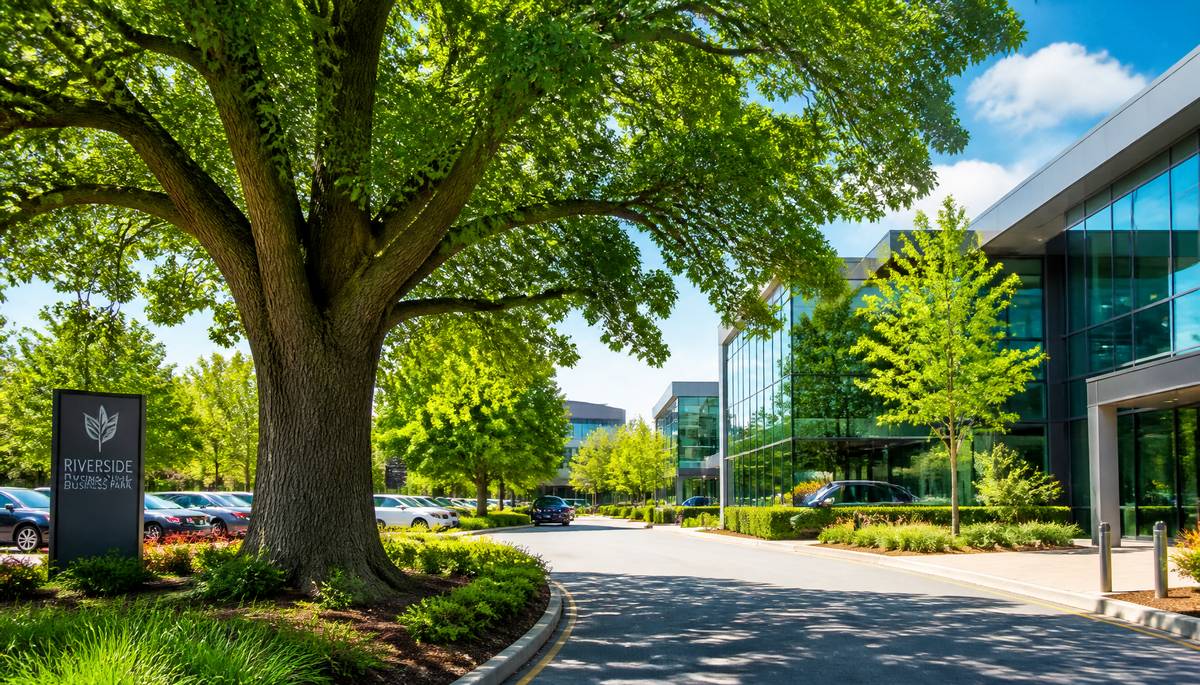 A fifty-year-old oak tree can find itself unemployed because somebody in facilities management has discovered that leaves fall off it. Across Britain's business parks, retail developments and industrial estates, mature trees are sometimes regarded as inconvenient obstacles rather than valuable commercial assets. Yet removing an established tree can have consequences extending well beyond the immediate landscaping budget. From rising temperatures around buildings to increased surface water runoff, the financial implications deserve considerably more attention than they often receive.
For commercial property owners, the important question is not simply whether a tree requires maintenance, but whether removing it represents a sensible long-term investment decision.
Established Trees Have Genuine Commercial Value
Mature trees contribute significantly to the appearance and character of commercial developments. An office complex surrounded by established greenery often creates a more welcoming impression than an identical building overlooking an uninterrupted expanse of asphalt.For landlords competing to attract tenants, landscaping can influence perceptions of property quality. Attractive outdoor surroundings may support tenant satisfaction, strengthen a development's identity and contribute to its overall marketability.
There are practical advantages too. Large trees provide natural shade for pedestrian routes, seating areas and parked vehicles. During summer, this can make outdoor spaces noticeably more comfortable for employees and visitors. Shaded surfaces also absorb less solar heat, potentially reducing temperatures around nearby buildings.
A mature tree effectively provides a cooling service without submitting an electricity bill, requesting annual leave or attending unnecessary management meetings.
Removing Trees Can Create Unexpected Drainage Problems
Commercial estates frequently contain extensive impermeable surfaces, including car parks, access roads, loading bays and building roofs. Heavy rainfall can therefore place considerable pressure on drainage infrastructure.Trees contribute to stormwater management by intercepting rainfall through their canopies, absorbing moisture through their roots and supporting soil structures that encourage water infiltration. Although trees cannot replace properly designed drainage systems, established vegetation can complement sustainable drainage measures.
Removing several mature trees may increase the amount of rainfall reaching the ground directly, particularly during moderate showers. Where soil has already been compacted by construction activity, additional runoff can exacerbate existing drainage problems.
Commercial property managers considering substantial tree removal should therefore examine the potential effects on surface water management. Consultation with drainage specialists may be appropriate where flooding is already a concern.
Tree Removal Is Not Always the Cheapest Solution
A quotation for removing a troublesome tree might initially appear more attractive than committing to ongoing maintenance. However, the immediate cost rarely tells the whole story.Professional tree removal can involve specialist equipment, traffic management, restricted access arrangements and the disposal of substantial quantities of timber. Stump grinding and subsequent landscaping introduce additional expenses. Replacing lost greenery with newly planted trees may require further investment, followed by years of watering and maintenance before those replacements provide comparable benefits.
By contrast, selective pruning or carefully planned crown reduction may address particular concerns while retaining much of the tree's value. The appropriate approach depends on species, condition, location and structural characteristics, making professional assessment essential rather than treating every inconvenient branch as grounds for dismissal.
Managing Safety Without Removing Every Tree
Safety remains a legitimate priority for commercial property managers. Falling branches, unstable trunks and obstructed visibility can create serious hazards around pedestrian routes, delivery entrances and customer parking areas. However, identifying a potential hazard does not automatically mean that complete removal is necessary.Professional tree inspections can distinguish between manageable defects and genuinely dangerous conditions. Deadwood removal, selective pruning and carefully specified crown reduction may reduce particular risks while preserving a healthy tree. Excessive pruning, on the other hand, can weaken trees, encourage undesirable regrowth and create additional maintenance problems.
Regular inspections are particularly important following severe storms or significant changes to surrounding ground conditions. Excavation work, vehicle movements and construction activity can damage root systems without producing immediately obvious symptoms above ground.
A tree that has survived seventy winters should not automatically lose its position because somebody has discovered a branch near the executive parking space.
Environmental Credentials Begin Outside the Office
Businesses increasingly emphasise sustainability through energy efficiency, waste reduction and environmental reporting. Yet removing mature trees while simultaneously announcing ambitious environmental commitments can create an unfortunate contradiction.Established trees store carbon, provide wildlife habitats, improve local biodiversity and contribute to more comfortable outdoor environments. Their environmental benefits generally cannot be replaced immediately by planting young saplings, regardless of how impressive the accompanying sustainability brochure looks.
Commercial landlords should therefore consider existing trees when developing environmental management policies. Retaining healthy specimens can complement wider sustainability objectives, particularly where landscaping improvements, sustainable drainage and biodiversity enhancement are already planned.
Where removal is unavoidable, replacement planting should account for appropriate species selection, available growing space, underground services and long-term maintenance requirements.
Developing a Sensible Tree Management Strategy
Rather than responding to individual complaints about falling leaves or overhanging branches, business parks can benefit from a structured approach to tree management.An initial tree survey can establish the species, approximate age, condition and location of significant specimens. This information provides a foundation for prioritising maintenance, identifying potential conflicts with infrastructure and forecasting future expenditure.
Property managers should also check whether Tree Preservation Orders or conservation area restrictions apply before authorising work. Planning constraints may influence what can legally be undertaken, even on privately owned commercial land.
Maintenance schedules should reflect actual tree conditions and site-specific risks rather than arbitrary annual cutting programmes. Coordination between arborists, facilities managers and landscape contractors can prevent unnecessary work and help protect root systems during construction projects.
Most importantly, decisions should consider the full financial implications of retaining, managing or removing trees over several years rather than concentrating exclusively on immediate expenditure.
Branching Out Towards Better Decisions
Mature trees deserve recognition as functioning components of commercial property infrastructure rather than decorative extras that can be removed whenever convenient. Their contribution to shade, drainage, appearance and environmental performance can provide lasting value that is difficult and expensive to recreate.Sometimes removal is unquestionably justified, particularly where serious structural defects or unavoidable development requirements exist. Nevertheless, professional assessment and proportionate maintenance frequently offer alternatives worth investigating.
For business parks seeking to control expenditure while improving their surroundings, preserving established trees can be a sound commercial decision. After all, replacing a mature oak with three ornamental saplings is rather like replacing an experienced facilities manager with three enthusiastic interns. Everyone means well, but it could take decades before the arrangement delivers comparable results.
Article kindly provided by tree-surgeons-chester.co.uk
Latest Articles
- Why a Plumbing Company's Google Reviews Matter More Than Its Advertising Budget in 2026
- Why Business Parks Should Think Twice Before Removing Their Mature Trees
- Why the Quietest Toilet in the Building Could Be Wasting the Most Water
- Could Someone Understand Compliance Six Months After It's Written?
- How Much CNC Capacity Is Hidden in Setup Time?
- How to Test a New Freelancer Without Handing Over Your Whole Project
- From CAD File to Finished Component: How Procurement Teams Can Avoid Custom-Part Delays
- The Repair-or-Replace Calculation: When an Older Computer Is Still Worth Saving
- Why Commercial Roof Problems Often Start as Access Problems
- The Cybersecurity Weakness Most Businesses Overlook
- Waste Audits for Small Businesses: The Simple Exercise That Can Cut Costs
- Why Fitness Goals Fail at Work but Succeed at Home
- The Hidden Cost of Guessing What Your Competitors Are Doing
- Why the Best Commercial Sites Are Designed Around Traffic Flow Before Appearance
- Designing Offices That Still Work Five Years From Now
- Why the Most Successful Commercial Landscapes Prioritise Function Before Appearance
- How Businesses Can Stay Operational During Major Refurbishment Works
- Near Misses: The Most Valuable Workplace Incidents You're Probably Ignoring
- Choosing the Right Lifting Method Before Choosing the Equipment
- Why Visitors Ignore Half Your Homepage Within Three Seconds
- Sales and Marketing
- Human Resources
- Finance and Accounting
- Business Consulting
- Information Technology
- Supply Chain Management
- Manufacturing and Production
- Logistics and Transportation
- Risk Management
- Project Management
- Market Research
- Business Intelligence
- Customer Relationship Management
- Product Development
- Quality Assurance
- Outsourcing Services
- Procurement and Vendor Management
- Legal and Compliance
- Business Strategy
- Operations Management
- Leadership and Management
- Data Analytics
- Innovation and R&D
- Training and Development
- Ecommerce Solutions
- Public Relations
- Advertising and Promotion
- Branding and Identity
- Business Networking
- Event Management
- Office Environment