

Why the Quietest Toilet in the Building Could Be Wasting the Most Water
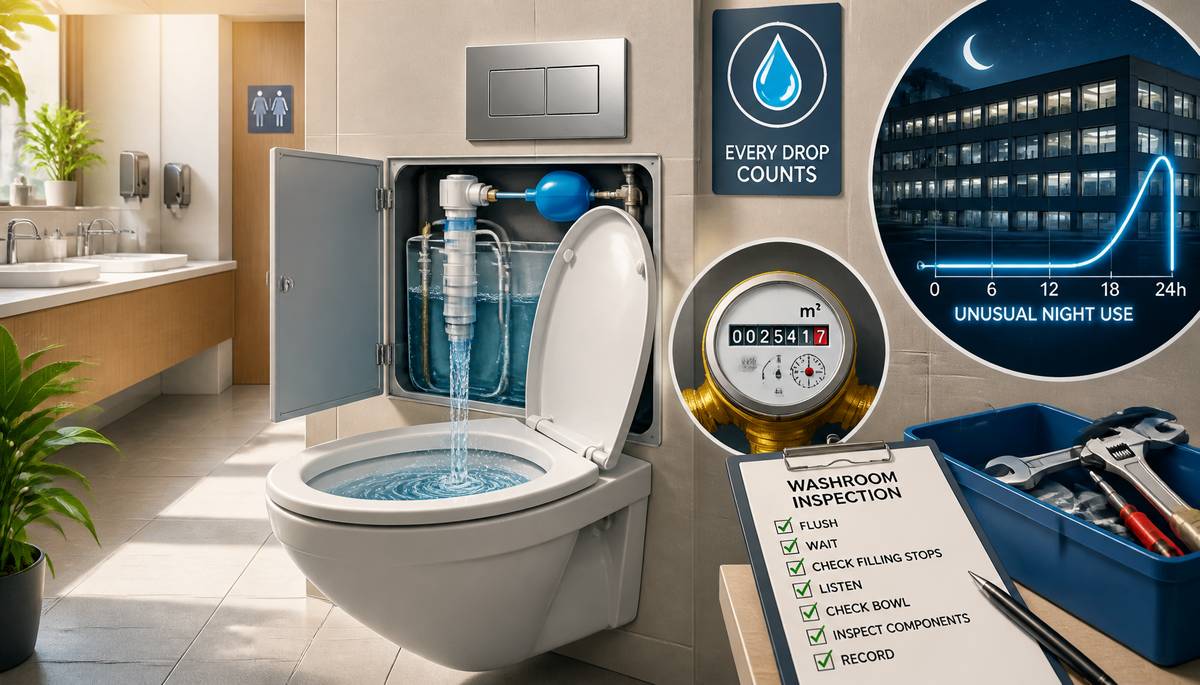 A toilet can waste thousands of litres of water without producing anything more dramatic than a perfectly respectable-looking bowl. No puddle spreads across the floor, nobody reports a suspicious dripping sound, and the facilities manager receives no frantic message containing the words “urgent” and “second floor”. Everything appears normal. Meanwhile, water may be passing continuously through the cistern and disappearing quietly down the drain.
Commercial washrooms are particularly vulnerable to this kind of unnoticed waste. Toilets may be used by hundreds of people each day, yet individual users have little reason to notice whether a cistern has completely stopped filling after they leave. Concealed cisterns make matters even less obvious because much of the working mechanism is hidden behind panels or walls.
When Silence Is Not Particularly Golden
A conventional toilet fault often announces itself. Water appears where water should definitely not be, somebody hears persistent filling, or the flush stops working altogether. A small continuous leak from a cistern into the bowl can be much more discreet.The problem may involve a worn flush valve seal, incorrectly adjusted float, faulty inlet valve or another component preventing the cistern from shutting off properly. Instead of filling to the required level and stopping, fresh water continues entering while excess water escapes into the bowl.
The toilet still flushes. The floor remains dry. Nobody has to leap backwards to protect their shoes. From the user's perspective, therefore, there may be no problem at all.
For the organisation paying the water bill, however, there most certainly is.
Small Flows Have Plenty of Time
Continuous water loss becomes expensive because commercial plumbing does not take evenings, weekends or bank holidays off. Even a relatively modest flow continues accumulating hour after hour.This makes apparently minor cistern faults fundamentally different from occasional waste. A tap accidentally left running might be discovered within minutes. A toilet allowing water to trickle continually into its bowl can potentially continue doing so for weeks, particularly in a large building where responsibility for individual washrooms is unclear.
Multiply that problem across several toilets and the volume can become substantial. An office block, hotel, school, restaurant or shopping centre may contain dozens of cisterns. It only takes a handful of faulty valves for an otherwise efficient building to develop a surprisingly enthusiastic relationship with the water company.
Concealed Cisterns Can Conceal More Than Plumbing
Modern commercial washrooms frequently use concealed cisterns because they create cleaner lines, protect plumbing components and make surfaces easier to maintain. They also remove much of the mechanism from everyday view.That makes deliberate inspection important. Maintenance staff cannot necessarily spot a malfunction simply by walking through the washroom. Access panels may need to be opened periodically so valves, connections and internal components can be examined.
Visible clues around the bowl should also be taken seriously. Persistent movement on the water surface, faint streaks down the rear of the pan or water continuing to enter long after flushing can all justify closer investigation.
Routine Checks Beat Surprise Bills
Commercial washroom inspections do not need to wait for something to break spectacularly. Toilets can be flushed individually and checked several minutes later to confirm that filling has stopped completely. Staff can also inspect bowls when the building is quiet, when subtle water movement is easier to detect.Meter readings provide another useful clue. Unexpected consumption during nights, weekends or shutdown periods can indicate water escaping somewhere within the property even when no obvious leak has been reported.
A toilet that attracts absolutely no attention may seem like the least interesting fixture in the building. From a maintenance perspective, that is precisely why it deserves an occasional second look.
Give the Water Meter a Night Shift
One of the simplest ways to investigate unexplained water consumption is to compare meter readings during periods when the building should be using very little water. An office that closes overnight, for example, provides a useful opportunity. Record the meter after everyone has left and check it again before normal activity resumes.Some consumption may be legitimate. Cleaning equipment, automatic appliances, irrigation systems or overnight processes can all use water. Once these are accounted for, however, unexplained movement deserves investigation. Toilets are among the obvious suspects because a leaking cistern can operate continuously without leaving any evidence outside the drainage system.
Smart meters and building-management systems can make unusual consumption patterns easier to identify. A persistent baseline of water use at three o'clock in the morning is particularly interesting when the only people supposedly working are the security guard and a photocopier.
One Inspection Is Not Enough
Checking every toilet once and declaring the building permanently watertight would be optimistic. Seals deteriorate, valves stick, floats move out of adjustment and components accumulate scale. A cistern working perfectly in January may have developed a steady leak by June.Routine washroom inspections should therefore include plumbing rather than concentrating solely on cleanliness, soap supplies and whether somebody has somehow managed to use an entire roll of paper towels to dry one pair of hands.
Facilities teams can incorporate a few straightforward observations into scheduled checks. Flush each toilet, allow the cistern enough time to refill and then check whether water is still entering the bowl. Listen for continued filling. Look for movement or rippling in the bowl. Where appropriate, inspect accessible cistern components for deterioration, scale or obvious problems.
Records are useful too. If the same toilet repeatedly requires adjustment or replacement parts, that history may indicate a more persistent problem rather than a succession of unrelated minor faults.
Usage Data Can Reveal What Eyes Miss
Water bills should not simply disappear into the accounting department as another unavoidable building expense. Comparing consumption over time can reveal changes that deserve attention.A sudden increase is easy to notice, but gradual rises can be more deceptive. Consumption may creep upwards over several billing periods as one leaking toilet becomes two, then three. Because the increase occurs slowly, it can be mistaken for normal variation in occupancy or activity.
Comparing water consumption with building occupancy can provide useful context. If fewer employees are using the premises but water consumption remains unchanged or increases, something deserves investigation. Likewise, an unusually high baseline during weekends or holiday closures can help distinguish plumbing losses from ordinary human use.
This matters financially, but it also matters environmentally. Treating and distributing potable water requires resources and energy. Allowing clean water to travel directly from the supply through a faulty cistern and into the sewer achieves remarkably little beyond exercising the meter.
Flush Out the Silent Offenders
The most troublesome commercial plumbing faults are not necessarily the ones that produce dramatic floods. A burst pipe demands attention immediately; a leaking toilet can quietly invoice the business for months.That makes prevention surprisingly uncomplicated. Regular visual checks, occasional meter monitoring, sensible maintenance records and prompt investigation of unusual consumption can expose problems while they are still small. Where internal components are worn or unreliable, replacing them promptly may cost far less than allowing continuous water loss to continue.
The quietest toilet in the building therefore deserves more suspicion than its impeccable behaviour might suggest. If nobody can hear it running, nobody can see it leaking and it never causes a puddle, it may appear to be the model employee of the washroom. Unfortunately, it could also be sitting there twenty-four hours a day quietly running up expenses.
Article kindly provided by safeplumbersglasgow.com
Latest Articles
- Why the Quietest Toilet in the Building Could Be Wasting the Most Water
- Could Someone Understand Compliance Six Months After It's Written?
- How Much CNC Capacity Is Hidden in Setup Time?
- How to Test a New Freelancer Without Handing Over Your Whole Project
- From CAD File to Finished Component: How Procurement Teams Can Avoid Custom-Part Delays
- The Repair-or-Replace Calculation: When an Older Computer Is Still Worth Saving
- Why Commercial Roof Problems Often Start as Access Problems
- The Cybersecurity Weakness Most Businesses Overlook
- Waste Audits for Small Businesses: The Simple Exercise That Can Cut Costs
- Why Fitness Goals Fail at Work but Succeed at Home
- The Hidden Cost of Guessing What Your Competitors Are Doing
- Why the Best Commercial Sites Are Designed Around Traffic Flow Before Appearance
- Designing Offices That Still Work Five Years From Now
- Why the Most Successful Commercial Landscapes Prioritise Function Before Appearance
- How Businesses Can Stay Operational During Major Refurbishment Works
- Near Misses: The Most Valuable Workplace Incidents You're Probably Ignoring
- Choosing the Right Lifting Method Before Choosing the Equipment
- Why Visitors Ignore Half Your Homepage Within Three Seconds
- Why Most Cybersecurity Conversations Ignore the Biggest Vulnerability: Everyday Workflow Habits
- What Your Workplace Is Communicating Before Anyone Says a Word
- Sales and Marketing
- Human Resources
- Finance and Accounting
- Business Consulting
- Information Technology
- Supply Chain Management
- Manufacturing and Production
- Logistics and Transportation
- Risk Management
- Project Management
- Market Research
- Business Intelligence
- Customer Relationship Management
- Product Development
- Quality Assurance
- Outsourcing Services
- Procurement and Vendor Management
- Legal and Compliance
- Business Strategy
- Operations Management
- Leadership and Management
- Data Analytics
- Innovation and R&D
- Training and Development
- Ecommerce Solutions
- Public Relations
- Advertising and Promotion
- Branding and Identity
- Business Networking
- Event Management
- Office Environment