

How Much CNC Capacity Is Hidden in Setup Time?
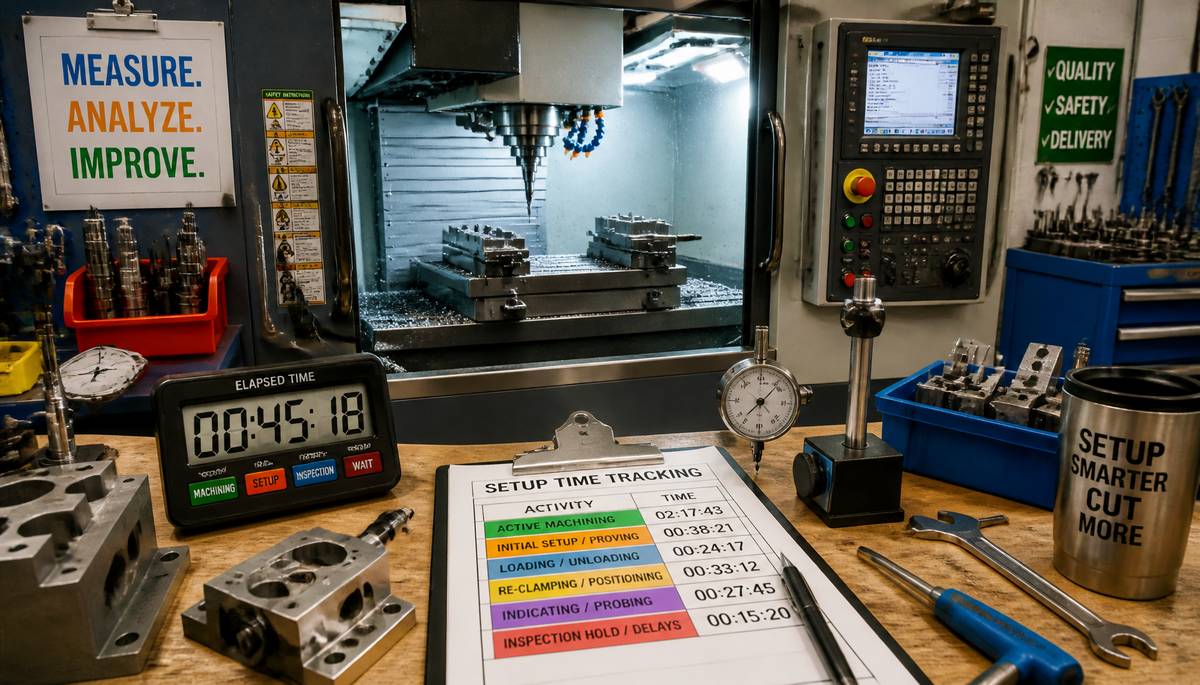 A CNC machine can look busy all day while producing remarkably little. The spindle stops, the operator reaches for an indicator, a part comes off, another goes on, dimensions are checked, jaws are adjusted, and suddenly an hour has passed without a single chip taking flight. None of this work is frivolous. It is essential. But when it is not measured, it becomes invisible, and invisible time has a talent for eating margins quietly.
For production managers, the useful question is not simply whether machines are running. It is how much of the scheduled day is spent making parts, and how much is spent making it possible to make parts. That difference can reveal capacity already sitting on the shop floor, wearing steel-toe boots and pretending not to exist.
Separate Spindle Time From Everything Around It
Start with a simple observation period. Choose a representative selection of jobs rather than the one immaculate repeat order that everyone wishes was the whole order book. Record the time spent cutting, loading, unloading, re-clamping, indicating, probing, checking first-off parts, changing tools, clearing swarf and waiting for inspection approval.The aim is not to blame operators for taking too long to find a spanner. A proper measurement should expose process friction, not create a fresh reason for people to hide behind a tool cabinet.
A basic tracking sheet can divide each job into:
- Active machining time
- Initial setup and programme proving
- Part loading and unloading
- Repositioning and re-clamping
- Indicating, probing and verification
- Inspection holds and material-related delays
Pay special attention to jobs involving awkward castings, weldments, flame-cut blanks and parts needing multiple faces machined. These are often quoted mainly from cycle time, even though the operator may spend just as long persuading the workpiece to sit still, squarely and safely. The part may be shaped like a future engineering masterpiece or a dropped sandwich. Either way, it still needs a secure datum.
Count Every Time the Part Loses Its Place
Re-clamping is often treated as a small interruption. Across a batch, it can become the main event. Each repositioning may require lifting, cleaning, locating, tightening, indicating and confirming that the new orientation has not introduced error. Add a cautious inspection cycle and the minutes multiply with startling discipline.Record not just the number of setups per job, but the elapsed time between the last cut in one orientation and the first cut in the next. This “dead zone” often contains the clearest opportunity for improvement.
Find the Delays That Repeat Without Adding Value
Once the timing data is visible, look for patterns rather than isolated frustrations. A ten-minute delay on one difficult component may be entirely reasonable. Ten minutes repeated across every part in a batch of fifty is a production issue wearing a very convincing disguise.Compare similar jobs and ask where the time differs. Is one machine regularly waiting for quality approval? Are operators repeatedly machining temporary tabs just to hold a component? Does a part require a separate operation solely because the first setup blocks access to one face? Are jaws, supports and stops being rebuilt for work that returns every few weeks?
The answers may point towards better process planning, standardised setup sheets, more reliable datum strategies, offline presetting, or a more adaptable approach to workholding. None of these changes needs to be dramatic to matter. Saving six minutes from each changeover will not cause a brass band to appear in the aisle, but it may create several additional productive hours each week.
Be careful, however, not to turn every minute into a command performance. An operator who takes time to clean locating surfaces, verify clamping and check a critical feature is protecting the business from scrap, rework and late delivery. The target is not maximum speed at any cost. It is fewer unnecessary interruptions while retaining stable, repeatable quality.
Turn Minutes Into a Capacity Figure
Managers often find the case for improvement becomes clearer when setup losses are converted into capacity. Suppose a machining cell loses two hours each day to avoidable re-clamping, repeated indicating and unnecessary handling. Across a five-day week, that is ten hours. Over a working year, it can amount to hundreds of machine hours that were already paid for through overheads, labour and floor space.Use the figure to test practical questions:
- Could the recovered time absorb an extra repeat order?
- Could it reduce overtime during a busy period?
- Could it shorten lead times for profitable contract work?
- Could it delay the need to purchase another machine?
- Could operators spend more time on first-off quality and less time wrestling a component into obedience?
Keep Measuring After the Improvement
A revised fixture, workholding arrangement or setup method should be tested on real production work and measured again. Compare total elapsed setup time, cycle time, inspection results, operator feedback and scrap or rework levels. If a faster arrangement creates unstable clamping or difficult tool access, it has simply moved the trouble somewhere more expensive.Build the best methods into job documentation. Clear photographs, datum notes, torque requirements, tooling lists and expected setup times help prevent each shift from rediscovering the process from first principles. Shops do not need every job to become a work of art; they need repeatable competence that survives holidays, handovers and the occasional mysteriously missing Allen key.
Hidden setup time is not a minor bookkeeping detail. It is often the gap between a shop that believes it needs more machines and one that can get substantially more from the equipment it already owns. Measure the pauses, understand why they occur, and improve the ones that offer no real protection to quality or safety.
Clamp Down on Lost Hours
The most valuable capacity increase may not arrive on a delivery lorry. It may be sitting inside the minutes between cuts: the re-clamp, the indication, the repeat check and the familiar search for a support block that was definitely here yesterday. When those minutes are measured and managed, throughput can rise without adding another machine, another shift or another expensive excuse.Article kindly provided by goldgripvises.com
Latest Articles
- Could Someone Understand Compliance Six Months After It's Written?
- How Much CNC Capacity Is Hidden in Setup Time?
- How to Test a New Freelancer Without Handing Over Your Whole Project
- From CAD File to Finished Component: How Procurement Teams Can Avoid Custom-Part Delays
- The Repair-or-Replace Calculation: When an Older Computer Is Still Worth Saving
- Why Commercial Roof Problems Often Start as Access Problems
- The Cybersecurity Weakness Most Businesses Overlook
- Waste Audits for Small Businesses: The Simple Exercise That Can Cut Costs
- Why Fitness Goals Fail at Work but Succeed at Home
- The Hidden Cost of Guessing What Your Competitors Are Doing
- Why the Best Commercial Sites Are Designed Around Traffic Flow Before Appearance
- Designing Offices That Still Work Five Years From Now
- Why the Most Successful Commercial Landscapes Prioritise Function Before Appearance
- How Businesses Can Stay Operational During Major Refurbishment Works
- Near Misses: The Most Valuable Workplace Incidents You're Probably Ignoring
- Choosing the Right Lifting Method Before Choosing the Equipment
- Why Visitors Ignore Half Your Homepage Within Three Seconds
- Why Most Cybersecurity Conversations Ignore the Biggest Vulnerability: Everyday Workflow Habits
- What Your Workplace Is Communicating Before Anyone Says a Word
- Planning an Office Renovation? Why Drywall Decisions Impact More Than Just the Walls
- Sales and Marketing
- Human Resources
- Finance and Accounting
- Business Consulting
- Information Technology
- Supply Chain Management
- Manufacturing and Production
- Logistics and Transportation
- Risk Management
- Project Management
- Market Research
- Business Intelligence
- Customer Relationship Management
- Product Development
- Quality Assurance
- Outsourcing Services
- Procurement and Vendor Management
- Legal and Compliance
- Business Strategy
- Operations Management
- Leadership and Management
- Data Analytics
- Innovation and R&D
- Training and Development
- Ecommerce Solutions
- Public Relations
- Advertising and Promotion
- Branding and Identity
- Business Networking
- Event Management
- Office Environment