

Near Misses: The Most Valuable Workplace Incidents You're Probably Ignoring
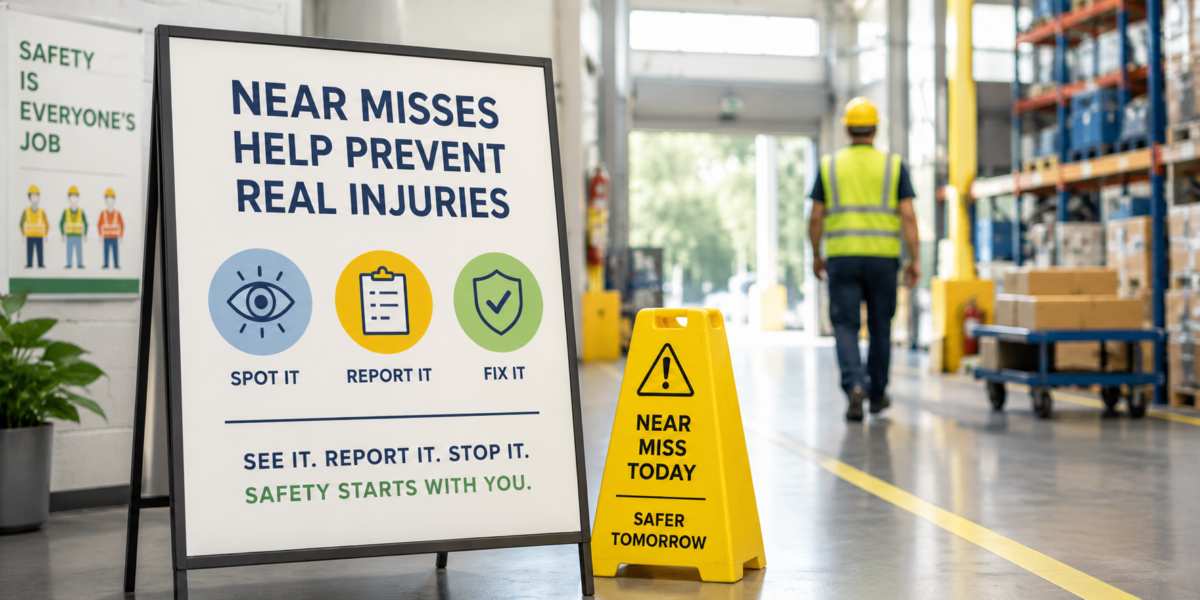 A forklift that stops two inches from a shelving unit has already told you a whole story; it just used less paperwork than an accident report.
Near misses are workplace incidents where nobody gets hurt, nothing breaks, and everyone exhales awkwardly before pretending they were totally calm the entire time. A box falls but misses someone's shoulder. A worker slips but grabs a railing. A machine jams but shuts down before causing an injury. These moments can feel like lucky escapes, but treating them as "nothing happened" is one of the easiest ways for employers to miss serious warning signs.
Almost Accidents Are Still Information
A near miss is not a non-event. It is evidence. It shows that a hazard exists, that people are exposed to it, and that the only thing separating the business from a real injury may have been timing, reflexes, or the heroic stability of someone's coffee cup.Employers often give full attention to incidents only after someone is injured. That makes sense emotionally, but it is backwards from a prevention standpoint. An actual injury tells you what went wrong after the damage is done. A near miss gives you the same kind of warning while everyone is still able to go home intact.
This matters because workplace injuries can lead to medical costs, lost productivity, staffing disruption, investigation time, legal exposure, and workers" compensation claims. A single preventable injury can create weeks or months of consequences. A near miss, handled properly, can create a fix before those consequences arrive wearing steel-toe boots.
Why Employees Stay Quiet
Many near misses go unreported because workers assume they are not important. Nobody was hurt, so why mention it? Others worry they will be blamed, mocked, or buried under forms longer than a medieval grocery receipt.This is where management tone matters. If reporting a near miss feels like confessing to a crime, people will keep quiet. If it feels like helping the team avoid future harm, they are more likely to speak up. Employers should make it clear that near miss reporting is about fixing systems, not hunting for someone to blame.
A serious safety culture does not rely on luck. It pays attention when luck shows up and says, "Please stop making me do all the work."
Patterns Hide in Plain Sight
One isolated near miss may not seem significant. Ten similar near misses, however, can reveal a problem that has been quietly growing in the background.Imagine a warehouse where employees repeatedly report slipping near a loading dock during rainy weather. Nobody has been injured yet. Management could dismiss each incident because no harm occurred. Alternatively, they could recognize a pattern and investigate the cause.
The issue might turn out to be poor drainage, worn floor surfaces, inadequate signage, or an entryway that funnels water into a busy work area. By addressing the root cause, the company may prevent multiple future injuries before they happen.
The same principle applies in offices, construction sites, retail stores, factories, and healthcare settings. Near misses often cluster around recurring hazards. Tracking them helps organizations identify trends that would otherwise remain hidden until an injury forces attention onto the problem.
Building a Simple Reporting System
Fortunately, creating a near miss reporting process does not require expensive software or a committee that meets often enough to qualify as a hobby.An effective system can be remarkably simple. Employees should be able to report incidents quickly and without fear of punishment.
A basic report should include:
- What happened
- Where it happened
- When it happened
- What could have happened under slightly different circumstances
- Possible causes
- Suggested solutions, if known
Managers should review reports regularly and communicate what actions were taken. This step is critical. When employees see that reports lead to improvements, they become far more willing to participate in the future.
Turning Close Calls Into Safer Workplaces
Not every near miss signals a major threat. Some will be minor. Others will reveal serious vulnerabilities that deserve immediate attention.The goal is not to create fear or encourage overreaction. The goal is awareness. A workplace that studies its close calls gains valuable insight into how work is actually performed, where hazards emerge, and which safeguards need strengthening.
Organizations that consistently learn from near misses often experience fewer injuries, lower claim costs, and a stronger overall safety culture. Employees notice when management takes prevention seriously. Trust grows when workers see hazards corrected before someone gets hurt.
Missing the Misses
Many workplace injuries arrive with advance notice. The warning simply does not look dramatic at the time. It appears as a box that almost fell, a vehicle that almost collided, or a worker who almost lost their footing.Those moments deserve attention because they provide an opportunity that actual accidents do not: the chance to learn without paying the full price of the lesson.
Companies that treat near misses as valuable information rather than forgettable events gain a clearer view of risk. They uncover patterns earlier, fix hazards faster, and create safer environments for everyone. Sometimes the most important workplace incident is the one that nearly happened and then quietly walked away.
Article kindly provided by schoenfeldlawyers.com
Latest Articles
- Why a Plumbing Company's Google Reviews Matter More Than Its Advertising Budget in 2026
- Why Business Parks Should Think Twice Before Removing Their Mature Trees
- Why the Quietest Toilet in the Building Could Be Wasting the Most Water
- Could Someone Understand Compliance Six Months After It's Written?
- How Much CNC Capacity Is Hidden in Setup Time?
- How to Test a New Freelancer Without Handing Over Your Whole Project
- From CAD File to Finished Component: How Procurement Teams Can Avoid Custom-Part Delays
- The Repair-or-Replace Calculation: When an Older Computer Is Still Worth Saving
- Why Commercial Roof Problems Often Start as Access Problems
- The Cybersecurity Weakness Most Businesses Overlook
- Waste Audits for Small Businesses: The Simple Exercise That Can Cut Costs
- Why Fitness Goals Fail at Work but Succeed at Home
- The Hidden Cost of Guessing What Your Competitors Are Doing
- Why the Best Commercial Sites Are Designed Around Traffic Flow Before Appearance
- Designing Offices That Still Work Five Years From Now
- Why the Most Successful Commercial Landscapes Prioritise Function Before Appearance
- How Businesses Can Stay Operational During Major Refurbishment Works
- Near Misses: The Most Valuable Workplace Incidents You're Probably Ignoring
- Choosing the Right Lifting Method Before Choosing the Equipment
- Why Visitors Ignore Half Your Homepage Within Three Seconds
- Sales and Marketing
- Human Resources
- Finance and Accounting
- Business Consulting
- Information Technology
- Supply Chain Management
- Manufacturing and Production
- Logistics and Transportation
- Risk Management
- Project Management
- Market Research
- Business Intelligence
- Customer Relationship Management
- Product Development
- Quality Assurance
- Outsourcing Services
- Procurement and Vendor Management
- Legal and Compliance
- Business Strategy
- Operations Management
- Leadership and Management
- Data Analytics
- Innovation and R&D
- Training and Development
- Ecommerce Solutions
- Public Relations
- Advertising and Promotion
- Branding and Identity
- Business Networking
- Event Management
- Office Environment