

How to Shoot for Post-Event Content Pipelines, Not Just the Day Itself
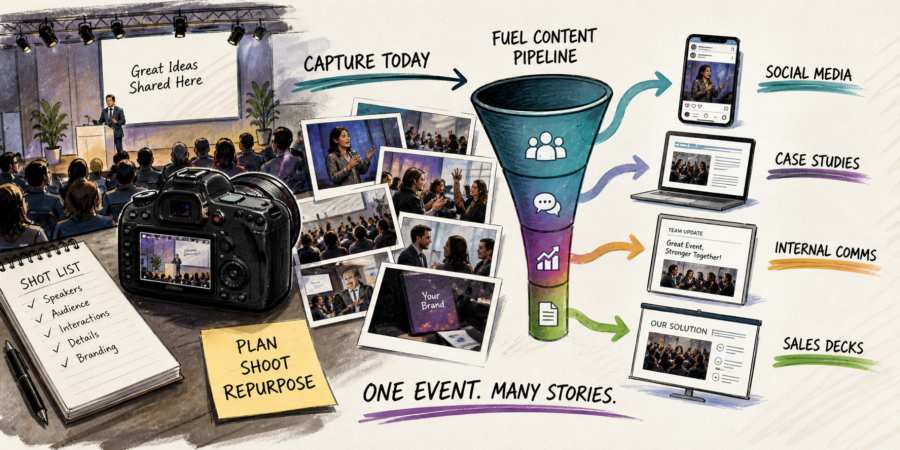
Why a Single Day Should Feed Months of Content
A camera shutter clicks once, but the impact of that moment can echo through marketing channels for months—if it's planned correctly. Too often, event photography is treated like a one-day sprint: capture what happens, deliver a gallery, move on. That approach leaves a surprising amount of value on the table, like ordering a full buffet and only eating the bread rolls.A more strategic mindset shifts the goal. Instead of documenting an event, you're building a content pipeline. Every photo becomes a potential asset for case studies, social media campaigns, recruitment materials, internal updates, and sales presentations. The event itself is just the starting point.
This requires alignment before the first photo is taken. Marketing teams, communications leads, and even sales departments should have a voice in what gets captured. Without that input, photographers end up guessing what might be useful later. Guessing is fine for trivia night, less so for brand storytelling.
Planning Shot Lists with Purpose
A strong shot list is less about artistic preference and more about strategic coverage. It should reflect how the images will be used long after the event wraps up. Instead of vague instructions like "get crowd shots," a better list ties directly to outcomes.- Leadership interacting with attendees for executive messaging
- Close-ups of engaged participants for social media posts
- Wide shots that show scale for sales decks
- Branded moments for consistent visual identity
- Behind-the-scenes interactions for internal communications
There's also a practical side to this. If no one asks for specific coverage, it rarely appears by accident. No photographer spontaneously decides, "This image would look excellent on slide 14 of a Q3 sales deck." That level of usefulness comes from planning, not luck.
Case Study Thinking During the Shoot
Some of the most valuable post-event content comes from case studies, yet they're often an afterthought. Capturing for case studies means thinking beyond aesthetics and focusing on narrative. Who attended? What problems were discussed? What outcomes were achieved?Images should support those answers. A handshake between partners, a speaker mid-explanation, a participant taking notes—these moments help illustrate impact. Without them, case studies become text-heavy documents that people skim and forget. With them, they gain credibility and visual interest.
There's also a timing factor. Case studies often surface weeks later, when no one remembers exactly what happened during session three at 2:15 PM. Photos become the memory. They fill in the gaps and make the story feel grounded rather than assembled from vague recollections.
Treating the event as raw material for future storytelling changes how every shot is approached. It's less about what looks good in the moment and more about what will still make sense three months later.
Designing for Social Media Without Looking Staged
Social media has an uncanny ability to expose anything that feels overly orchestrated. A group of people staring at a camera with identical smiles might technically check the "team photo" box, but it rarely earns attention online. Planning for social content means prioritizing authenticity while still being intentional.Photographers should look for moments that feel natural but still align with brand messaging. Someone laughing mid-conversation, a speaker pausing for emphasis, attendees reacting in real time—these are the frames that translate well into posts people actually engage with. The goal isn't perfection; it's relatability.
That said, a bit of gentle direction goes a long way. Left completely unscripted, even the most dynamic event can produce a surprising number of photos where everyone looks like they're waiting for a bus. Subtle prompts—encouraging interaction, adjusting positioning, or timing a shot—help capture energy without turning the scene into a staged production.
Internal Communications Need Love Too
External audiences aren't the only ones who benefit from thoughtful event photography. Internal communications often rely on visuals to reinforce culture, celebrate milestones, and keep teams informed. Unfortunately, these needs are frequently overlooked during planning.Images that highlight collaboration, employee participation, and candid interactions can be invaluable for newsletters, intranet updates, and leadership briefings. They provide proof that the organization isn't just hosting events—it's building connections.
There's also a subtle but important distinction here. Internal audiences can spot generic stock-style imagery from a mile away. Authentic photos from real events carry more weight. They show familiar faces, real environments, and actual moments. That kind of credibility isn't something you can recreate later with a last-minute photoshoot and a bowl of strategically placed fruit.
Repurposing Strategies That Extend Value
Once the event is over, the real work begins. A well-planned shoot produces a library of assets that can be adapted across multiple formats and channels. The key is organizing and repurposing efficiently.- Crop wide shots into multiple social-friendly formats
- Pair images with quotes for thought leadership posts
- Use speaker photos in future promotional materials
- Build visual slides for sales presentations
- Create highlight reels for ongoing campaigns
There's also a pacing advantage. Instead of releasing everything at once and watching engagement spike briefly before disappearing, content can be distributed over time. This keeps the event alive in audience memory without requiring another full production effort. It's the marketing equivalent of meal prepping, except the ingredients are photos instead of vegetables, and the results are far more likely to impress your boss.
Framing the Bigger Picture
An event doesn't end when the lights go down and the last attendee leaves. Its value continues through the content it generates, provided that content was captured with intention. Treating photography as part of a broader pipeline ensures that each image serves a purpose beyond documentation.Planning shot lists around marketing goals, capturing moments that support storytelling, and thinking ahead to repurposing all contribute to a more effective outcome. The camera becomes less of a passive observer and more of a strategic tool.
A well-executed event shoot doesn't just preserve memories. It builds a resource that keeps working long after the venue is empty, quietly supporting campaigns, presentations, and communications without asking for another day on the calendar.
Article kindly provided by gdholland.co.uk
Latest Articles
- The Repair-or-Replace Calculation: When an Older Computer Is Still Worth Saving
- Why Commercial Roof Problems Often Start as Access Problems
- The Cybersecurity Weakness Most Businesses Overlook
- Waste Audits for Small Businesses: The Simple Exercise That Can Cut Costs
- Why Fitness Goals Fail at Work but Succeed at Home
- The Hidden Cost of Guessing What Your Competitors Are Doing
- Why the Best Commercial Sites Are Designed Around Traffic Flow Before Appearance
- Designing Offices That Still Work Five Years From Now
- Why the Most Successful Commercial Landscapes Prioritise Function Before Appearance
- How Businesses Can Stay Operational During Major Refurbishment Works
- Near Misses: The Most Valuable Workplace Incidents You're Probably Ignoring
- Choosing the Right Lifting Method Before Choosing the Equipment
- Why Visitors Ignore Half Your Homepage Within Three Seconds
- Why Most Cybersecurity Conversations Ignore the Biggest Vulnerability: Everyday Workflow Habits
- What Your Workplace Is Communicating Before Anyone Says a Word
- Planning an Office Renovation? Why Drywall Decisions Impact More Than Just the Walls
- The False Economy of Low-Cost Protective Solutions
- The Valuable Materials Hiding in Everyday Electronics
- The Hidden SEO Asset Most Small Businesses Ignore: Why Directory Listings Still Matter
- How to Renovate Without Losing Productivity: A Smarter Approach to Workplace Upgrades
- Sales and Marketing
- Human Resources
- Finance and Accounting
- Business Consulting
- Information Technology
- Supply Chain Management
- Manufacturing and Production
- Logistics and Transportation
- Risk Management
- Project Management
- Market Research
- Business Intelligence
- Customer Relationship Management
- Product Development
- Quality Assurance
- Outsourcing Services
- Procurement and Vendor Management
- Legal and Compliance
- Business Strategy
- Operations Management
- Leadership and Management
- Data Analytics
- Innovation and R&D
- Training and Development
- Ecommerce Solutions
- Public Relations
- Advertising and Promotion
- Branding and Identity
- Business Networking
- Event Management
- Office Environment