

Concrete Surfaces Built for the Long Haul
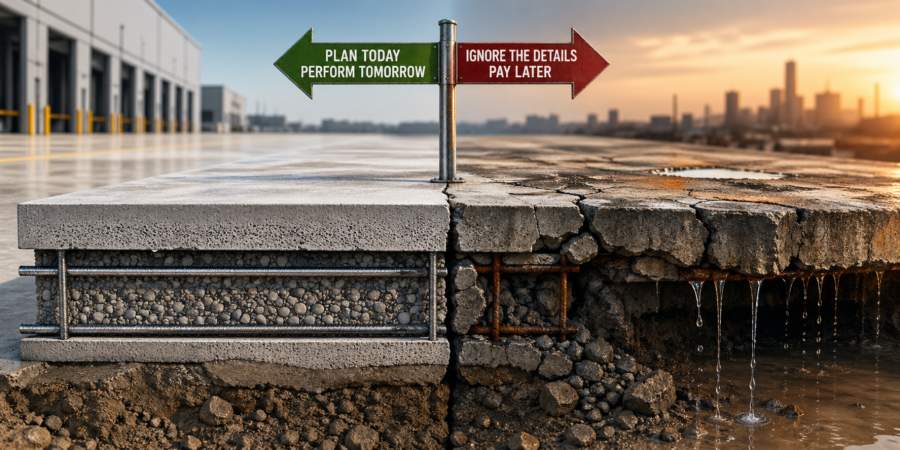 Concrete rarely gets applause at ribbon-cuttings, but it has a sneaky way of becoming everyone's problem when it starts cracking, staining, scaling, or looking like it has been personally offended by the weather.
For commercial projects, long-term durability begins before the first truck arrives. A surface expected to handle delivery vehicles, foot traffic, freeze-thaw cycles, equipment loads, spills, sunlight, and the occasional mystery stain from "someone in operations" needs more than basic strength. It needs planning that considers how the slab will behave over years, not just how smooth it looks on opening day.
Start With the Right Mix
Concrete mix design is one of the biggest factors in how a surface ages. Compressive strength matters, but it is only part of the story. Water-cement ratio, aggregate size, admixtures, air entrainment, and cement type all influence durability.For exterior commercial surfaces, air entrainment can help concrete survive freeze-thaw conditions by giving expanding water tiny places to go. Without it, trapped moisture can cause scaling and surface damage. Indoors, especially in warehouses or manufacturing spaces, abrasion resistance and load capacity may matter more than weather exposure.
A common mistake is choosing a mix based only on minimum specification. That can work fine until the surface begins acting like it read the contract and decided to do exactly that—nothing more. For high-use areas, a slightly better mix may reduce repair costs, downtime, and future complaints from people wearing hard hats and unhappy expressions.
Finishing Is Not Just Cosmetic
Finishing affects both appearance and performance. Overworking the surface, adding water during finishing, or sealing bleed water under the top layer can weaken the slab's skin. That weak surface may later dust, flake, or wear unevenly.A good finish should match the surface's purpose. A polished indoor floor, a broom-finished sidewalk, and a loading dock slab all need different textures and treatments. Slip resistance, cleanability, drainage, and wear should guide the finishing method.
Serious attention should also be given to curing. Concrete does not simply "dry." It gains strength through hydration, and poor curing can leave it weaker, more porous, and more vulnerable to cracking. Keeping the surface properly moist and protected during early curing is one of the least glamorous but most important steps in long-term performance.
Environmental Factors Never Take a Day Off
Concrete lives outdoors or in semi-controlled environments more often than people realize, and those environments are rarely polite. Temperature swings, moisture, chemicals, and UV exposure all influence how a slab ages.Freeze-thaw cycles are especially unforgiving. Water enters small pores, freezes, expands, and gradually pushes the surface apart. In warmer climates, heat can accelerate drying and shrinkage, increasing the risk of cracking if joints and curing are not handled properly.
Drainage plays a surprisingly large role. Water that sits on or beneath concrete is rarely there for decorative purposes. Proper grading, subbase preparation, and surface slope help prevent pooling, which reduces long-term deterioration. Slabs that shed water effectively tend to look better years later, while poorly drained surfaces develop stains, scaling, and a personality problem.
In industrial or commercial settings, exposure to oils, salts, or chemicals adds another layer of complexity. Protective sealers or coatings can extend surface life, but only if the underlying concrete was properly prepared in the first place.
Cracking Happens, But Control Matters
Concrete cracks. That is not a design flaw; it is a material reality. The goal is not to eliminate cracks entirely but to control where and how they occur.Control joints guide cracking into planned lines, preventing random fractures across the surface. Their spacing and depth should reflect slab thickness, expected loads, and environmental conditions. Ignoring joint planning often leads to cracks appearing wherever the concrete feels like expressing itself.
Reinforcement, whether through rebar, wire mesh, or fibers, helps manage crack width and distribution. It does not stop cracking entirely, but it keeps things from getting dramatic.
For commercial operators, uncontrolled cracking is not just an aesthetic issue. It can affect safety, maintenance costs, and even equipment performance in facilities where smooth surfaces are critical.
Wear Patterns Tell a Story
Over time, concrete reveals how it is used. High-traffic paths become polished or worn, loading zones may show rutting or surface fatigue, and neglected corners collect stains that seem determined to stay forever.Understanding expected traffic patterns during design can improve durability. Thicker slabs, better reinforcement, or harder surface finishes in high-impact areas can reduce uneven wear. It is easier to reinforce a loading dock during construction than to explain later why forklifts have carved their own design into the floor.
Regular maintenance also plays a role. Cleaning, sealing, and minor repairs can extend service life significantly. Ignoring small issues tends to invite larger ones, often at inconvenient times.
Pour Decisions Pay Off
Long-lasting concrete surfaces are rarely the result of a single good decision. They come from a chain of choices—mix design, finishing, curing, environmental planning, and maintenance—that work together over time.For contractors, developers, and facilities managers, thinking beyond the initial pour leads to fewer surprises down the road. A surface that holds up well after years of use does more than perform—it stays out of meetings, budgets, and complaint logs, which might be the highest compliment concrete can receive.
Article kindly provided by concreteoflongmont.com
Latest Articles
- Why a Plumbing Company's Google Reviews Matter More Than Its Advertising Budget in 2026
- Why Business Parks Should Think Twice Before Removing Their Mature Trees
- Why the Quietest Toilet in the Building Could Be Wasting the Most Water
- Could Someone Understand Compliance Six Months After It's Written?
- How Much CNC Capacity Is Hidden in Setup Time?
- How to Test a New Freelancer Without Handing Over Your Whole Project
- From CAD File to Finished Component: How Procurement Teams Can Avoid Custom-Part Delays
- The Repair-or-Replace Calculation: When an Older Computer Is Still Worth Saving
- Why Commercial Roof Problems Often Start as Access Problems
- The Cybersecurity Weakness Most Businesses Overlook
- Waste Audits for Small Businesses: The Simple Exercise That Can Cut Costs
- Why Fitness Goals Fail at Work but Succeed at Home
- The Hidden Cost of Guessing What Your Competitors Are Doing
- Why the Best Commercial Sites Are Designed Around Traffic Flow Before Appearance
- Designing Offices That Still Work Five Years From Now
- Why the Most Successful Commercial Landscapes Prioritise Function Before Appearance
- How Businesses Can Stay Operational During Major Refurbishment Works
- Near Misses: The Most Valuable Workplace Incidents You're Probably Ignoring
- Choosing the Right Lifting Method Before Choosing the Equipment
- Why Visitors Ignore Half Your Homepage Within Three Seconds
- Sales and Marketing
- Human Resources
- Finance and Accounting
- Business Consulting
- Information Technology
- Supply Chain Management
- Manufacturing and Production
- Logistics and Transportation
- Risk Management
- Project Management
- Market Research
- Business Intelligence
- Customer Relationship Management
- Product Development
- Quality Assurance
- Outsourcing Services
- Procurement and Vendor Management
- Legal and Compliance
- Business Strategy
- Operations Management
- Leadership and Management
- Data Analytics
- Innovation and R&D
- Training and Development
- Ecommerce Solutions
- Public Relations
- Advertising and Promotion
- Branding and Identity
- Business Networking
- Event Management
- Office Environment