

How Smart Pool Surround Design Minimizes Maintenance Issues and Liability
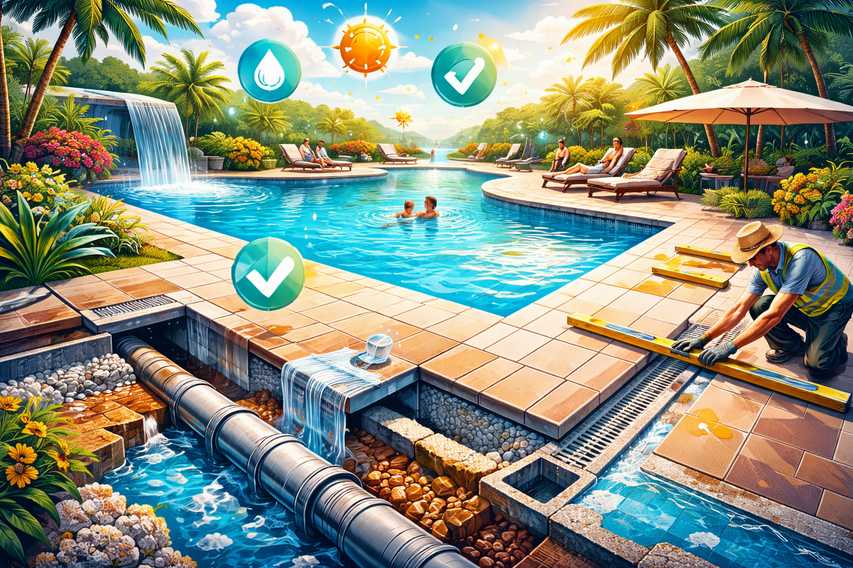 Concrete around a pool does more than frame the water. It quietly dictates whether the space becomes a low-maintenance asset or a recurring source of complaints, callbacks, and the occasional barefoot sprint across scorching ground. For contractors and designers, the difference often comes down to decisions that seem minor at first glance—until they aren't.
Drainage Decisions That Prevent Expensive Problems
Water has a habit of going exactly where it shouldn't. Around pools, poor drainage doesn't just create puddles; it accelerates surface wear, encourages staining, and introduces slip risks that can quickly escalate from inconvenience to liability.Effective grading is the first line of defense. Even a subtle slope—barely noticeable to the eye—can direct water away from high-traffic zones and structural edges. When surfaces are left too flat, water lingers, and lingering water tends to invite trouble. Over time, that trouble shows up as discoloration, surface breakdown, and unhappy clients wondering why their new space looks prematurely aged.
Drainage channels and expansion joints also play a role that goes beyond technical compliance. Thoughtfully placed, they reduce water pooling without interrupting the visual flow of the design. Poorly planned, they become tripping hazards or aesthetic distractions that clients will notice immediately—and comment on repeatedly.
There's also the issue of runoff management. Water that escapes the pool area needs a destination that doesn't compromise adjacent landscaping or structures. Sending it toward a garden bed might sound harmless until soil erosion and plant damage enter the picture. Suddenly, a pool project has expanded into a landscaping repair job no one budgeted for.
Designing for Safety Without Making It Look Like a Warning Sign
Slip resistance is one of those requirements that no one argues with, yet many still approach as an afterthought. The challenge lies in achieving grip without making the surface feel overly rough or visually industrial.Surface texture, finish, and material choice all contribute to how safe a pool surround feels underfoot. A well-designed finish provides traction even when wet, while still being comfortable enough for bare feet. This balance is where many projects either shine or stumble—sometimes literally.
From a liability perspective, the stakes are high. A surface that looks appealing but becomes slippery when wet creates a mismatch between expectation and reality. That mismatch is where incidents happen. Contractors who understand this dynamic can position themselves as not just builders, but risk mitigators.
It's also worth noting that safety doesn't need to be visually loud. Subtle texturing techniques can deliver performance without turning the pool area into something that resembles a public walkway with commitment issues.
Layout Choices That Shape How Spaces Are Used
Beyond technical performance, the layout of a pool surround influences how people move, gather, and relax. A design that looks impressive on paper can quickly feel awkward in practice if circulation and usability aren't considered.Wider walkways, for example, reduce congestion and create a sense of openness, particularly in spaces intended for entertaining. Narrow pathways, on the other hand, tend to produce bottlenecks—especially when someone decides to carry a tray of drinks at exactly the wrong moment.
Seating zones, transitions between surfaces, and entry points into the pool all contribute to how intuitive the space feels. When these elements are thoughtfully arranged, users don't have to think about where to step or sit. They simply use the space as intended, which is often the highest compliment a design can receive.
Colour selection also plays a functional role. Lighter tones reflect heat, making surfaces more comfortable underfoot, while darker finishes may elevate visual contrast but increase surface temperature. Choosing between them isn't just an aesthetic decision—it directly affects how long people are willing to stay poolside without performing a quick-footed dance routine.
Material and Finish Choices That Influence Long Term Performance
Not all concrete behaves the same once it's exposed to water, sunlight, and constant foot traffic. The finish applied to a pool surround can either extend its lifespan or quietly shorten it. Decorative finishes may win initial approval, but if they're not suited to the environment, that approval can fade faster than the colour itself.Sealing is another area where shortcuts tend to surface later—usually at the worst possible time. A properly sealed surface resists moisture penetration, staining, and surface degradation. An improperly sealed one becomes a case study in what happens when water is given too much freedom. Stains settle in, minor imperfections expand, and maintenance routines become more frequent than anyone planned for.
Durability isn't just about strength; it's about consistency. A surface that wears evenly over time maintains its appearance and performance. One that degrades unevenly draws attention to every flaw, creating a patchwork effect that no design brief ever asked for.
Balancing Visual Appeal With Practical Outcomes
A pool surround has to look good, but it also has to function under real conditions—wet feet, shifting temperatures, and frequent use. Designs that lean too heavily toward aesthetics without considering these realities often create more work for everyone involved.For architects and builders, this balance is where real value is delivered. Clients may initially focus on how a space looks, but their long-term satisfaction depends on how it performs. A surface that stays comfortable, safe, and easy to maintain will always outlast one that only impressed during the handover walkthrough.
There's also a reputational element at play. Projects that age well become references. Projects that require constant fixes become stories—usually shared with a level of detail that no one enjoys hearing.
- Consistent drainage reduces maintenance and prevents structural issues
- Slip-resistant finishes lower risk without compromising design intent
- Thoughtful layouts improve usability and client satisfaction
- Appropriate material choices extend lifespan and reduce callbacks
Keeping Things on Solid Ground
Smart pool surround design doesn't rely on a single decision; it's the result of many small, deliberate choices working together. When grading directs water properly, surfaces provide reliable traction, and layouts support natural movement, the space becomes easier to maintain and safer to use.For professionals, this approach does more than improve outcomes—it reduces friction across the entire project lifecycle. Fewer issues mean fewer return visits, fewer disputes, and fewer moments spent explaining why something that looked fine at the start isn't holding up as expected.
And while no design can eliminate every potential issue, thoughtful planning gets remarkably close. At that point, the pool surround does what it was always supposed to do: support the space quietly, perform reliably, and avoid becoming the most talked-about feature for all the wrong reasons.
Article kindly provided by handmadeconcretingperth.com.au
Latest Articles
- Why a Plumbing Company's Google Reviews Matter More Than Its Advertising Budget in 2026
- Why Business Parks Should Think Twice Before Removing Their Mature Trees
- Why the Quietest Toilet in the Building Could Be Wasting the Most Water
- Could Someone Understand Compliance Six Months After It's Written?
- How Much CNC Capacity Is Hidden in Setup Time?
- How to Test a New Freelancer Without Handing Over Your Whole Project
- From CAD File to Finished Component: How Procurement Teams Can Avoid Custom-Part Delays
- The Repair-or-Replace Calculation: When an Older Computer Is Still Worth Saving
- Why Commercial Roof Problems Often Start as Access Problems
- The Cybersecurity Weakness Most Businesses Overlook
- Waste Audits for Small Businesses: The Simple Exercise That Can Cut Costs
- Why Fitness Goals Fail at Work but Succeed at Home
- The Hidden Cost of Guessing What Your Competitors Are Doing
- Why the Best Commercial Sites Are Designed Around Traffic Flow Before Appearance
- Designing Offices That Still Work Five Years From Now
- Why the Most Successful Commercial Landscapes Prioritise Function Before Appearance
- How Businesses Can Stay Operational During Major Refurbishment Works
- Near Misses: The Most Valuable Workplace Incidents You're Probably Ignoring
- Choosing the Right Lifting Method Before Choosing the Equipment
- Why Visitors Ignore Half Your Homepage Within Three Seconds
- Sales and Marketing
- Human Resources
- Finance and Accounting
- Business Consulting
- Information Technology
- Supply Chain Management
- Manufacturing and Production
- Logistics and Transportation
- Risk Management
- Project Management
- Market Research
- Business Intelligence
- Customer Relationship Management
- Product Development
- Quality Assurance
- Outsourcing Services
- Procurement and Vendor Management
- Legal and Compliance
- Business Strategy
- Operations Management
- Leadership and Management
- Data Analytics
- Innovation and R&D
- Training and Development
- Ecommerce Solutions
- Public Relations
- Advertising and Promotion
- Branding and Identity
- Business Networking
- Event Management
- Office Environment