

Why Commercial Lighting Design Keeps Missing the Mark
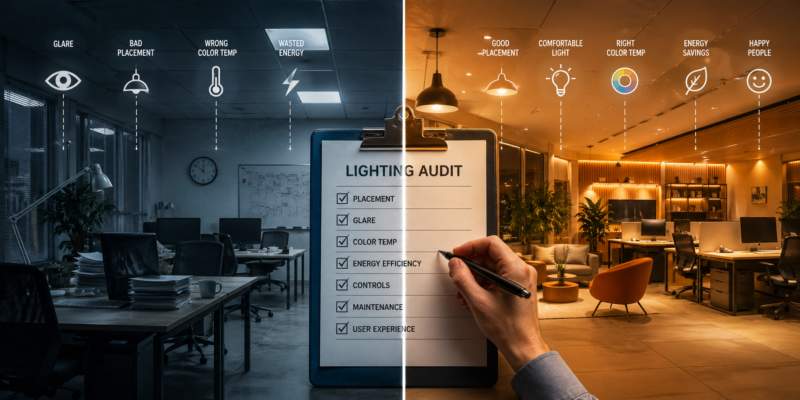 Lighting is usually noticed only when it goes wrong. Nobody walks into a meeting room and applauds the perfectly balanced illumination, but they will absolutely complain when everyone looks like they are being interrogated by a budget detective show.
Commercial lighting design often fails because the plan on paper behaves better than the real space. A layout might look sensible in drawings, pass basic compliance checks, and impress during procurement, yet still create glare, shadows, eye strain, odd color shifts, or a general feeling that the room was designed by someone who hates Mondays.
When Intent Meets Reality
Most commercial lighting starts with a good intention. Offices need productivity. Retail spaces need merchandise to look appealing. Hotels and restaurants need atmosphere. Warehouses need safety and visibility. The trouble begins when those goals are translated into fixtures, wattages, color temperatures, controls, and placement decisions without enough testing against actual use.A workspace may be designed for focus, but if fixtures sit directly above screens, employees spend the day tilting their heads like confused pigeons. A retail area may aim for warmth, but poor color rendering can make premium products look tired, dusty, or mysteriously beige. A hospitality space may chase ambience so enthusiastically that guests need their phone torch to find the menu.
This is where a systems approach helps. Lighting is not just a collection of bulbs and fittings. It is an interaction between architecture, surfaces, daylight, furniture, human behavior, maintenance schedules, energy targets, and budget decisions. When one part is ignored, the whole system starts producing strange results.
Audit the Space Like a Faulty Machine
A useful lighting audit begins with observation, not assumptions. Walk the space at different times of day. Check how it performs in the morning, afternoon, evening, and after dark. Daylight can be helpful, but it can also turn one side of an office into a glowing desert while the other side feels like a storage cupboard with ambition.Look for recurring symptoms:
- Areas where people avoid sitting or working
- Reflections on screens, glass, counters, or polished floors
- Dark patches in circulation routes or task areas
- Overlit zones that feel harsh or clinical
- Color differences between neighboring fixtures
- Controls that nobody understands, uses, or trusts
Placement Is Where Good Plans Go to Die
Even high-quality fixtures can underperform when positioned poorly. Lighting that sits directly above eye level often creates glare, while lighting placed too far apart leaves islands of brightness surrounded by gloom. In open-plan offices, rows of evenly spaced fittings may look tidy but ignore how desks, partitions, and screens actually break up the space.A systems audit treats placement as a dynamic relationship rather than a fixed grid. Move through the space and change your perspective. Sit, stand, lean, walk. What looks fine from the doorway may become unbearable when viewed from a workstation for eight hours straight. If a chair has become mysteriously unpopular, lighting is a suspect worth interrogating.
Color Temperature and the Identity Crisis
Color temperature is often chosen with broad strokes: "cool for offices, warm for hospitality." Reality is less cooperative. Mixing inconsistent color temperatures can make a space feel disjointed, like multiple moods competing for attention.In commercial environments, consistency usually matters more than strict adherence to a single number. A retail space selling premium goods benefits from lighting that renders colors accurately and evenly. An office might tolerate slightly cooler tones, but not if they make people look unwell during video calls. Nobody enjoys explaining why they appear faintly green at 10 a.m.
A proper audit checks for visual harmony across zones, ensuring that transitions feel intentional rather than accidental. It also considers how materials—wood, metal, fabric—respond to the chosen light. The same fixture can flatter one surface and betray another.
Energy Efficiency Without Self-Sabotage
Energy targets often drive lighting decisions, and rightly so. However, efficiency can quietly undermine performance when applied too aggressively. Reducing wattage, cutting fixture counts, or installing overly complex control systems can lead to spaces that technically save energy but fail their occupants.An audit should ask whether efficiency measures are working with or against usability. Are sensors turning lights off while people are still present but motionless? Are dimming systems calibrated properly, or do they fluctuate like a moody elevator? Are maintenance teams able to keep the system running, or has it become a puzzle no one wants to solve?
Efficiency works best when it feels invisible. If people constantly notice it, something has likely gone wrong.
Bright Ideas That Actually Stick
Treating lighting as a system means adjustments are iterative. Rarely does one change fix everything. Instead, small, targeted improvements build toward a better outcome.- Reposition fixtures to reduce direct glare and improve coverage
- Standardize color temperature within functional zones
- Adjust controls to match real occupancy patterns
- Introduce task lighting where general lighting falls short
- Review maintenance practices to keep performance consistent
Ending on a Brighter Note
Commercial lighting succeeds when it quietly supports everything else happening in a space. It should make work easier, products more appealing, and environments more comfortable without demanding attention. When it fails, it tends to do so loudly, even if nobody can quite explain why.Approaching lighting as a system turns vague complaints into solvable problems. It replaces guesswork with observation and replaces frustration with incremental progress. And in a world where people spend long hours under artificial light, that shift is more than technical—it is practical, visible, and long overdue.
Article kindly provided by cplights.com
Latest Articles
- Why a Plumbing Company's Google Reviews Matter More Than Its Advertising Budget in 2026
- Why Business Parks Should Think Twice Before Removing Their Mature Trees
- Why the Quietest Toilet in the Building Could Be Wasting the Most Water
- Could Someone Understand Compliance Six Months After It's Written?
- How Much CNC Capacity Is Hidden in Setup Time?
- How to Test a New Freelancer Without Handing Over Your Whole Project
- From CAD File to Finished Component: How Procurement Teams Can Avoid Custom-Part Delays
- The Repair-or-Replace Calculation: When an Older Computer Is Still Worth Saving
- Why Commercial Roof Problems Often Start as Access Problems
- The Cybersecurity Weakness Most Businesses Overlook
- Waste Audits for Small Businesses: The Simple Exercise That Can Cut Costs
- Why Fitness Goals Fail at Work but Succeed at Home
- The Hidden Cost of Guessing What Your Competitors Are Doing
- Why the Best Commercial Sites Are Designed Around Traffic Flow Before Appearance
- Designing Offices That Still Work Five Years From Now
- Why the Most Successful Commercial Landscapes Prioritise Function Before Appearance
- How Businesses Can Stay Operational During Major Refurbishment Works
- Near Misses: The Most Valuable Workplace Incidents You're Probably Ignoring
- Choosing the Right Lifting Method Before Choosing the Equipment
- Why Visitors Ignore Half Your Homepage Within Three Seconds
- Sales and Marketing
- Human Resources
- Finance and Accounting
- Business Consulting
- Information Technology
- Supply Chain Management
- Manufacturing and Production
- Logistics and Transportation
- Risk Management
- Project Management
- Market Research
- Business Intelligence
- Customer Relationship Management
- Product Development
- Quality Assurance
- Outsourcing Services
- Procurement and Vendor Management
- Legal and Compliance
- Business Strategy
- Operations Management
- Leadership and Management
- Data Analytics
- Innovation and R&D
- Training and Development
- Ecommerce Solutions
- Public Relations
- Advertising and Promotion
- Branding and Identity
- Business Networking
- Event Management
- Office Environment