

Why Venues Matter More Than Gear in Premium Photography
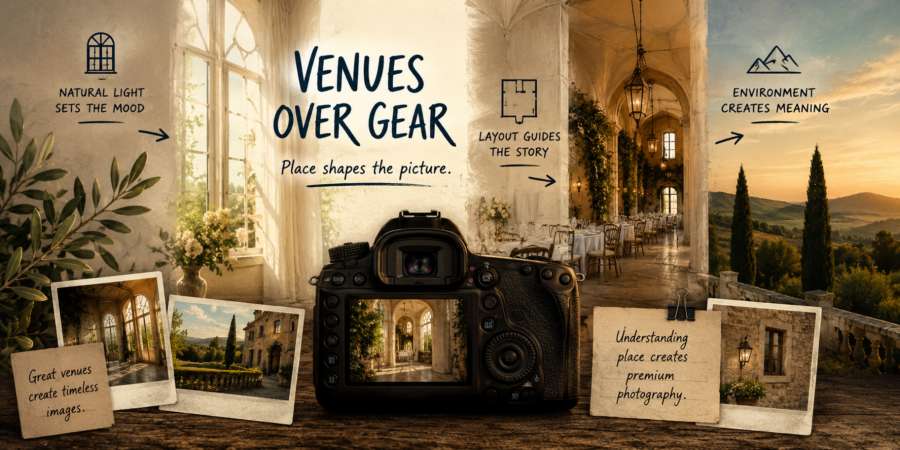 A camera upgrade can feel wonderfully productive. Boxes arrive, specifications sparkle, and for several glorious hours it seems entirely possible that sharper autofocus will also organise tax receipts and answer awkward client emails. Yet premium photography is rarely transformed by gear alone. More often, it is shaped by something sitting quietly in plain sight: the venue itself.
Photographers chasing high-end work sometimes treat equipment as the headline act and location as supporting scenery. In reality, architecture, layout and atmosphere often decide whether photographs merely document a moment or give it depth and identity.
Architecture Does Half the Work
Great venues offer structure before a shutter is pressed. A stone manor, modern glass extension or weathered courtyard provides shape, scale and rhythm that influence composition without demanding theatrical intervention.Strong architectural lines guide the eye and create natural framing. Arches, staircases and textured walls introduce visual order that expensive lenses cannot manufacture from thin air. Even modest locations with character can produce remarkable imagery because they give photographs a sense of place.
Premium photography depends on more than technical perfection. Clients investing in higher-end imagery are often responding to atmosphere. They want photographs that feel anchored somewhere distinctive rather than floating in a generic blur of pleasant backgrounds.
This matters commercially. Photographers known for working thoughtfully with venues build portfolios that feel cohesive and intentional. That reputation attracts clients who value experience and storytelling rather than comparing camera brands as though choosing kitchen appliances.
Natural Light Has No Loyalty to Camera Prices
Light behaves with complete indifference toward equipment budgets.A beautifully positioned window can outperform a costly upgrade in creating flattering portraits or atmospheric editorial imagery. Soft morning light spilling through tall panes or directional afternoon sun crossing a room introduces mood that no specification sheet promises.
Serious photographers understand this well. Light defines texture, mood and dimensionality. Harsh overhead fixtures in cramped spaces can flatten even technically perfect images, while balanced natural light can elevate relatively simple compositions.
Venue scouting therefore becomes less of a luxury and more of a professional discipline. Understanding where light travels, when shadows lengthen and which rooms offer flexibility allows photographers to work with confidence instead of negotiating with ceiling lights that appear determined to sabotage civilisation.
Premium work often feels effortless precisely because preparation happened long before the camera emerged from its bag.
Room Layout Changes the Entire Story
Room layout influences photography in ways that clients rarely notice but frequently feel.Wide spaces allow breathing room and layered compositions. Narrow corridors create intimacy or tension depending on how they are approached. Ceiling height alters perceived openness, while furniture placement can either support movement or create an obstacle course worthy of sporting commentary.
Photographers planning premium sessions benefit from studying movement through a venue rather than simply identifying attractive corners. How people enter spaces, where conversations gather and which areas naturally encourage interaction all affect storytelling.
This is particularly relevant in destination and event photography. A location with visual beauty but poor logistical flow can quickly become frustrating. Guests cluster in inconvenient areas, portraits feel rushed and photographers spend valuable energy relocating people who have become mysteriously attached to unsuitable backgrounds.
Serious venue knowledge helps avoid this.
Photographers who understand room dynamics can anticipate opportunities instead of reacting to problems. They know which staircase photographs elegantly, which courtyard becomes chaotic after midday and which reception room contains lighting that turns skin tones into something unexpectedly adventurous.
Environmental Storytelling Creates Premium Value
Premium photography is rarely about isolated subjects alone. It is about people existing within environments that reveal mood, context and identity.Environmental storytelling gives photographs emotional and commercial weight. A portrait framed within meaningful surroundings communicates more than expression alone. Location becomes part of the narrative.
This approach is particularly powerful for destination photographers or those marketing luxury services. Venues become collaborators in image-making rather than rented backdrops.
Consider how different settings influence perception:
- A historic building suggests heritage and permanence
- A minimalist architectural space feels contemporary and refined
- Gardens and outdoor landscapes create openness and natural movement
- Industrial spaces introduce texture and edge
Clients often remember photographs because of how they felt inside a place. Architecture, atmosphere and environmental context leave lasting impressions that technical sharpness alone cannot provide.
Venue Relationships Are Quiet Business Assets
Building relationships with venues is not merely networking dressed in comfortable shoes. It is strategic.Photographers who understand and respect venues often gain advantages unavailable through advertising alone. Familiarity leads to smoother planning, trusted recommendations and increased confidence from clients selecting suppliers.
A venue team that knows a photographer works efficiently and treats spaces respectfully may recommend them repeatedly. That relationship carries genuine business value.
There is also a creative benefit. Returning to familiar locations allows photographers to refine ideas and discover subtleties missed during initial visits. Certain corners reveal themselves gradually. Light shifts differently across seasons. Even weather interacts with architecture in unexpected ways.
Meanwhile, the camera industry continues its noble campaign to persuade photographers that fulfilment sits one purchase away.
Room With a Viewfinder
Premium photography succeeds through intention more than accumulation. Equipment matters, certainly. Reliable tools support professional work and technical skill remains essential. Yet venues shape images at a foundational level.Architecture creates structure. Light defines mood. Layout guides interaction. Environment builds narrative.
Photographers who learn to see venues as creative partners rather than passive locations often produce stronger work and build stronger businesses. The camera records what stands before it, but the venue frequently determines whether those photographs feel memorable, distinctive and worth returning to years later.
Article kindly provided by emma-janephotography.co.uk
Latest Articles
- Why the Quietest Toilet in the Building Could Be Wasting the Most Water
- Could Someone Understand Compliance Six Months After It's Written?
- How Much CNC Capacity Is Hidden in Setup Time?
- How to Test a New Freelancer Without Handing Over Your Whole Project
- From CAD File to Finished Component: How Procurement Teams Can Avoid Custom-Part Delays
- The Repair-or-Replace Calculation: When an Older Computer Is Still Worth Saving
- Why Commercial Roof Problems Often Start as Access Problems
- The Cybersecurity Weakness Most Businesses Overlook
- Waste Audits for Small Businesses: The Simple Exercise That Can Cut Costs
- Why Fitness Goals Fail at Work but Succeed at Home
- The Hidden Cost of Guessing What Your Competitors Are Doing
- Why the Best Commercial Sites Are Designed Around Traffic Flow Before Appearance
- Designing Offices That Still Work Five Years From Now
- Why the Most Successful Commercial Landscapes Prioritise Function Before Appearance
- How Businesses Can Stay Operational During Major Refurbishment Works
- Near Misses: The Most Valuable Workplace Incidents You're Probably Ignoring
- Choosing the Right Lifting Method Before Choosing the Equipment
- Why Visitors Ignore Half Your Homepage Within Three Seconds
- Why Most Cybersecurity Conversations Ignore the Biggest Vulnerability: Everyday Workflow Habits
- What Your Workplace Is Communicating Before Anyone Says a Word
- Sales and Marketing
- Human Resources
- Finance and Accounting
- Business Consulting
- Information Technology
- Supply Chain Management
- Manufacturing and Production
- Logistics and Transportation
- Risk Management
- Project Management
- Market Research
- Business Intelligence
- Customer Relationship Management
- Product Development
- Quality Assurance
- Outsourcing Services
- Procurement and Vendor Management
- Legal and Compliance
- Business Strategy
- Operations Management
- Leadership and Management
- Data Analytics
- Innovation and R&D
- Training and Development
- Ecommerce Solutions
- Public Relations
- Advertising and Promotion
- Branding and Identity
- Business Networking
- Event Management
- Office Environment